
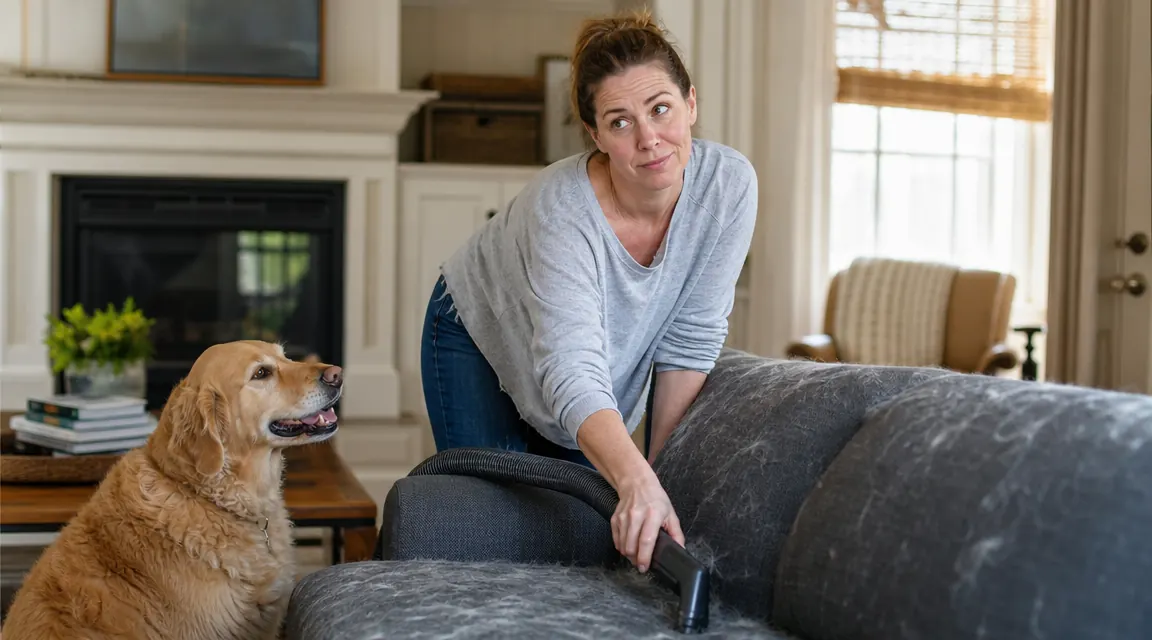
My golden mix Rosie shed so much last spring that I found dog hair in my cereal bowl, on my keyboard, and somehow inside a sealed container of oatmeal. My cat Pesto was not any better. Every black shirt I owned looked frosted. I tried lint rollers, I tried vacuuming twice a day, and I tried pretending the couch was just a different texture now. None of it worked because I was treating the symptom instead of the cause. The real answer turned out to be a combination of the right grooming tool, a consistent schedule, and a couple of basic dietary changes. Once I put all three together, the shedding did not stop entirely, but it dropped by what felt like sixty or seventy percent within about four weeks. I was pulling fur out of the brush during grooming sessions instead of finding it stuck to everything I owned.
Shedding is a normal biological process. Your dog and cat are supposed to shed. The goal is not to eliminate it but to capture loose fur before it migrates to your furniture, your food, and your air filter. What follows is the five-step system I built over two years of trial and error with two dogs and a cat. It is not complicated or expensive. It just requires doing the right things in the right order, with some consistency. Most people I talk to who struggle with pet shedding are either using the wrong tool, brushing too infrequently, or skipping the dietary piece entirely. Fixing any one of those three moves the needle. Fixing all three changes the situation.
The brush that started turning this around for me costs less than a cup of coffee
The Hartz Groomer's Best Small Slicker Brush is what I use on both Pesto the cat and my smaller dog Biscuit. Rated 4.5 stars by nearly 29,000 buyers on Amazon, and at its current price there is no reason to keep putting up with the wrong tool.
Amazon Check Today's Price on Amazon →Step 1: Match the Tool to the Coat Type
The single biggest mistake I made for years was using one brush on every animal regardless of coat length or texture. A pin brush that works well on Rosie's long, wavy fur does almost nothing on Biscuit's short, dense coat. Using the wrong tool does not just mean poor shedding results. It can also scratch the skin if the pins are too coarse for the coat, or miss the undercoat entirely if the bristle spacing is too wide for the fur type.
For short-coated dogs and cats, a slicker brush with fine, closely spaced pins is the most effective everyday tool for capturing loose fur before it falls out on its own. The Hartz Groomer's Best Small Slicker Brush sits in this category. The angled stainless pins reach through the top coat and pull shed fur up and out without dragging on the skin. I use it on Biscuit, a 14-pound beagle-chihuahua mix, and on Pesto, a domestic shorthair with a coat that somehow produces unlimited fur relative to her body size. For Rosie, the golden mix, I pair the slicker with a wide-tooth metal comb to work through the longer sections after the initial brush pass.
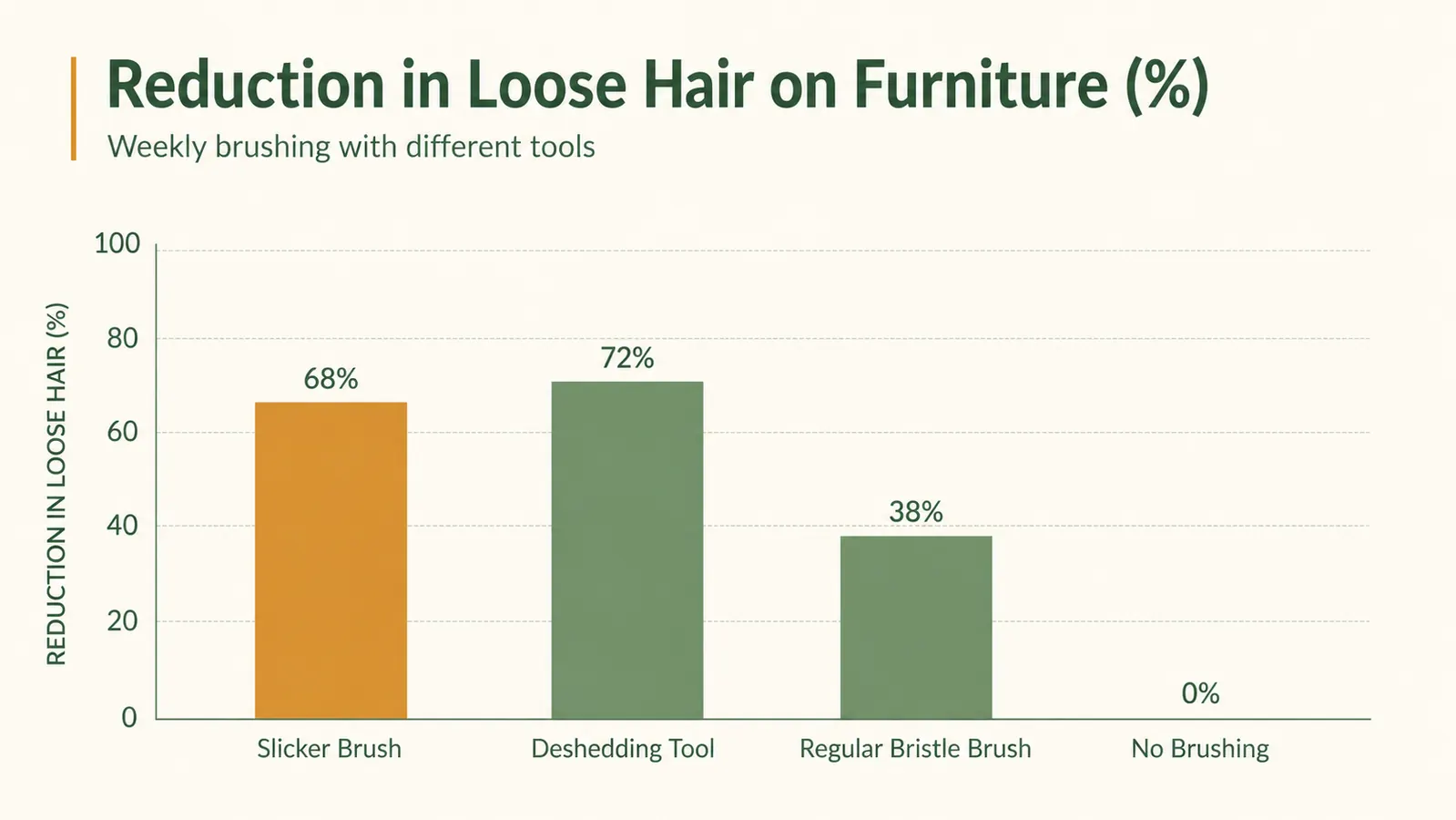
Long-haired cats and dogs with thick double coats, like huskies or Maine coons, may also benefit from a deshedding tool in addition to a slicker brush, especially during peak seasonal shed. But start with the slicker for everyday maintenance. It removes the most surface-level loose fur quickly, which is what keeps your couch clean between full grooming sessions. If you are unsure which brush to reach for first, the slicker is the right default for almost every coat type and will handle regular shedding maintenance without damaging the coat.
Step 2: Build a Brushing Schedule You Will Actually Keep
Brushing twice a month and hoping for the best is not a shedding strategy. Loose fur does not wait for your schedule. It falls out continuously, and the only way to intercept it is to brush often enough that the dead coat gets removed before it detaches on its own and ends up on your furniture. For most dogs and cats with normal shedding patterns, three to four sessions per week is the sweet spot for keeping the house manageable. During heavy seasonal shed cycles, which hit twice a year for most double-coated breeds, daily brushing for two or three weeks makes a real difference.
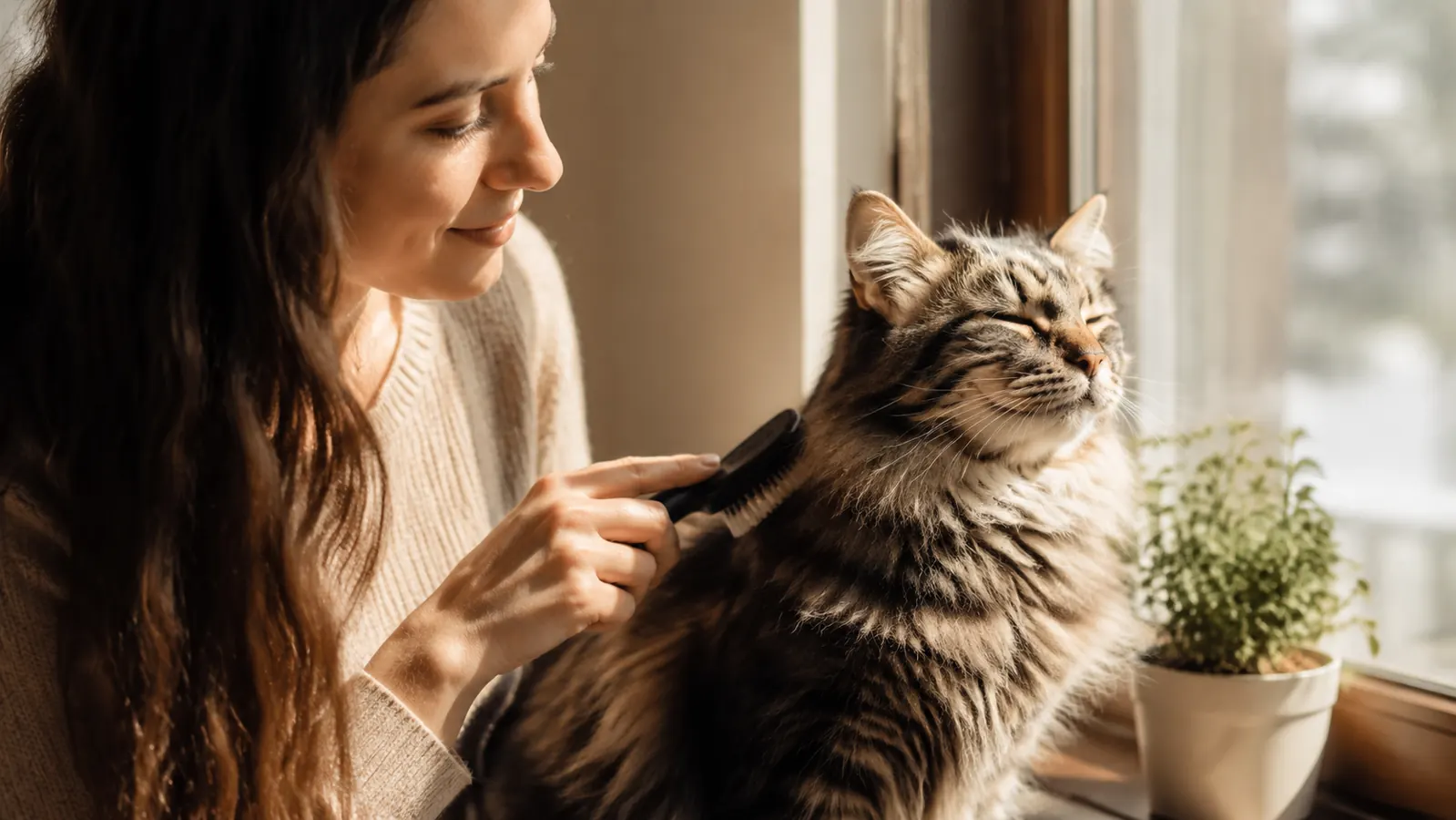
The trick to actually maintaining a brushing schedule is attaching it to something you already do. I brush Biscuit during the morning coffee window and brush Pesto while I watch TV in the evenings. Each session takes about five minutes per animal. The sessions are short enough that neither of them puts up much resistance, and the results show up almost immediately in how much fur I stop finding on the furniture and my clothes.
One thing I noticed is that the quality of each brushing session matters more than the duration. Five focused minutes with a good tool, covering the back, sides, belly, and haunches thoroughly, will capture far more shed fur than fifteen distracted minutes going over the same patch. Make sure you work through the whole coat each time, including the chest and the area around the collar, where fur tends to mat without ever getting brushed. Those spots are easy to skip and they are exactly where loose fur accumulates fastest.

Step 3: Address Nutrition First, Products Second
A dry, dull coat that sheds excessively is often a nutritional issue. Dogs and cats fed a diet low in omega-3 and omega-6 fatty acids tend to have coats that break and shed more than they should for their breed. Before I changed anything else in my routine, I added a small daily amount of salmon oil to both dogs' kibble. The change was visible within about three weeks. Rosie's coat looked noticeably shinier, and the volume of shed fur I was pulling off her during brushing sessions dropped by a meaningful amount.
You do not need a specialty prescription diet for this to work. A few pumps of salmon oil over regular kibble, or a food that lists a quality animal protein as the first ingredient without corn or wheat filler as the dominant carbohydrate source, covers the basics for most healthy adult dogs and cats. If your pet has been shedding excessively for months and the diet has not changed, the food is the first thing worth examining before spending money on any new grooming product. A poor diet limits how much any brush or grooming routine can do.
Hydration is part of this too. Dry skin sheds more, and dry skin is often partly a water issue. Make sure fresh water is always available and that your pet is actually drinking it. Some cats are finicky about water sources and will drink more from a fountain than a still bowl. I switched Pesto to a fountain two years ago and the difference in her coat quality over the following months was noticeable, though I cannot isolate that from everything else I changed at the same time.
Step 4: Bathe on a Smart Schedule
Bathing loosens dead fur and makes your brushing sessions significantly more productive if you do them in the right order. The correct order is: brush first, bathe second, then brush again lightly once the coat is fully dry. Bathing a coat full of loose, tangled fur first just pushes the dead fur down closer to the skin and makes it harder to remove. Pre-bath brushing also prevents tangles from tightening into mats during the washing and drying process.
For most dogs, bathing every four to six weeks is the right frequency. More frequent bathing strips the natural oils from the coat and can increase shedding over time by drying out the skin. Cats generally groom themselves and rarely need a bath unless they have gotten into something. When I do bathe Rosie, I brush her out thoroughly before putting her in the tub, use a gentle oatmeal-based shampoo, and follow up with a thorough brush once she is completely dry. The post-bath brush after drying consistently pulls an impressive amount of shed fur that loosened during the wash but had not detached yet.
Step 5: Manage the Environment So Shed Fur Does Not Pile Up
Even with a solid brushing routine, some fur is going to end up on your furniture. This step is about containing it efficiently so it does not build up to the point where it feels unmanageable. A few specific changes made a bigger difference for me than any cleaning product I tried before I got the grooming side under control.
First, I switched to a vacuum with a motorized brush head designed for pet hair. The standard upholstery attachment that came with my old vacuum was useless on the couch. The motorized head physically works fur out of fabric fibers rather than just passing over them. Second, I started washing dog and cat bedding once a week instead of once a month. Bedding is where shed fur concentrates the fastest, and keeping it clean reduces how much fur migrates to the rest of the house. Third, I keep a rubber grooming glove near the couch for quick touch-up sessions when Pesto decides to sit directly on me right after I have already brushed her, which she does regularly.
None of this replaces consistent brushing. The environmental management is the downstream cleanup layer that makes the whole routine feel sustainable rather than like an endless losing battle. When I skip brushing for a week, no amount of vacuuming keeps up. When I brush three or four times a week as planned, the cleanup takes maybe ten minutes on a weekend morning. Those are two very different experiences, and the only variable is whether I stayed on top of the grooming side.
What Else Helps
Beyond the five steps above, a few smaller habits are worth adding once the core routine is solid. Running a humidifier in winter helps if your home gets very dry, since low humidity dries out skin and can increase shedding. If you have a dog or cat that seems to shed dramatically more than normal regardless of what you try, especially paired with itching, bald patches, or changes in coat texture, a vet visit to rule out thyroid issues, allergies, or skin conditions is worthwhile. Excessive shedding is sometimes a symptom rather than just a breed trait. For more on what causes grooming routines to go wrong, see my breakdown of the most common grooming mistakes pet owners make, and if you want a deeper look at the brush I use daily, the full Hartz slicker brush review covers two months of testing on three different animals.
I used to think shedding was just the tax you pay for owning a dog. Turns out the right brush and a consistent schedule change things faster than you would expect. Four weeks in, I stopped finding fur in my cereal.
If you are only going to change one thing this week, start with the brush
The Hartz Groomer's Best Small Slicker Brush is the tool I reach for first on both my cat and my smaller dog. At today's price it is the lowest-risk change in this whole guide, and nearly 29,000 Amazon reviewers giving it 4.5 stars is a solid signal that it is working for people well beyond my household.
Amazon Check Today's Price on Amazon →