My cat Olive is not what you would call a willing participant. She is a five-year-old tortoiseshell rescue who weighs about nine pounds, sheds relentlessly from October through June, and regards any grooming tool with the same suspicion she reserves for the vacuum cleaner. My other two regulars are Biscuit, a seven-year-old dachshund mix at about twelve pounds, and Penny, a four-year-old Chihuahua-terrier cross at nine pounds. All three are well within the size range the Hartz Groomer's Best Small Slicker Brush is actually designed for. That matters, and I will come back to it.
I bought this brush in early April after going through two rubber-tipped brushes that stopped pulling loose fur within about six sessions. At the current price I did not expect a lot. What I got was more complicated than I expected, and after eight weeks of weekly sessions I have a reasonably clear picture of where it earns its star rating and where it does not.
The Quick Verdict
A genuinely capable small slicker brush for cats and small dogs, limited only by its handle ergonomics and a pin layout that needs a light touch on short-haired cats.
Amazon Check Today's Price →Still losing a coat's worth of fur to your couch every week? The Hartz Groomer's Best Small Slicker is budget-friendly and built for cats and small dogs specifically.
With nearly 29,000 reviews and a 4.5-star rating, it is one of the most tested slicker brushes in this size range on Amazon. Worth checking today's price before paying three times as much for a brand name.
Amazon Check Today's Price on Amazon →How I Have Used It
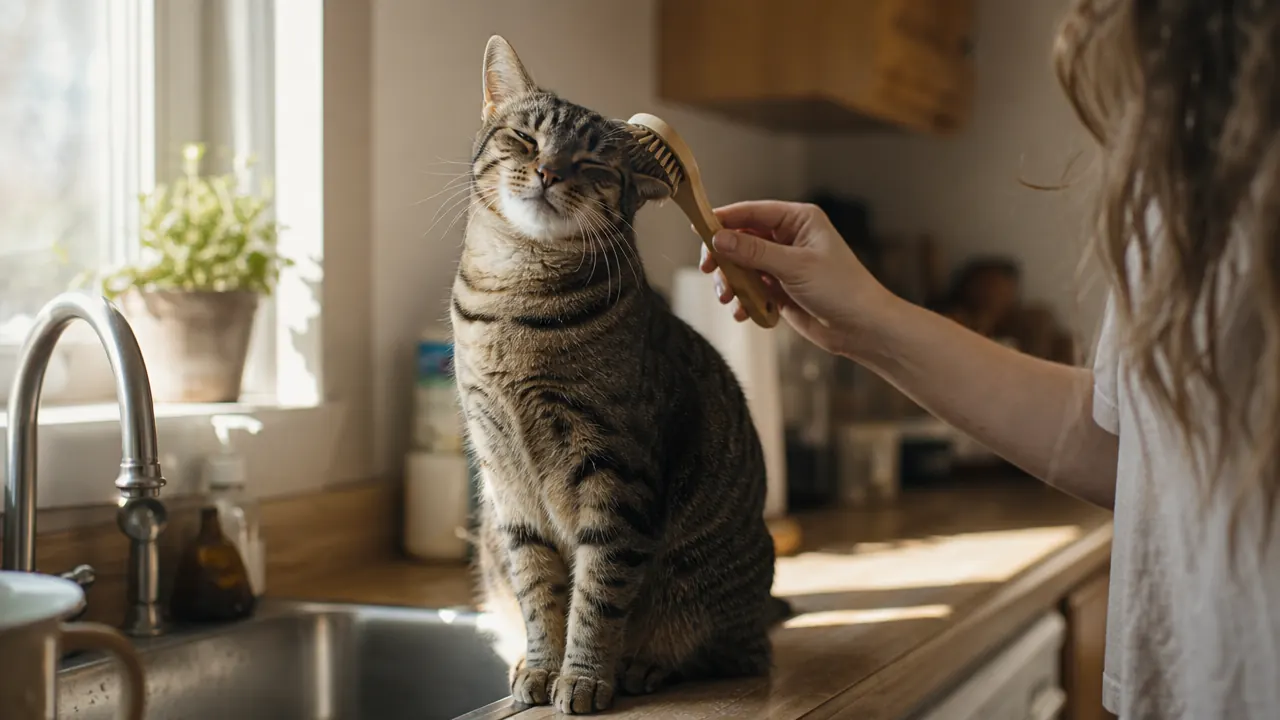
Eight weeks of weekly grooming, every Saturday morning, across all three animals. Olive gets roughly five minutes of light brushing along her back and sides, avoiding her belly because she will take your hand off. Biscuit gets a full back-to-tail pass plus leg work, about seven minutes total. Penny, who has a wiry short coat, gets a quick three-minute once-over. I also used the brush on a friend's miniature schnauzer during a house visit, which gave me a fifth data point on a coat type neither of my dogs has.
I kept each session in the same room, same grooming spot on the kitchen table, and made a point of noticing fur volume, how the brush felt in my hand through the session, and how each animal responded. The brush has not been washed in those eight weeks, which is realistic for how most people actually use these, and I wanted to see how it held up without ideal maintenance.
One thing I want to flag upfront: this is the small version. It measures roughly four inches across the head. If you have a golden retriever, a husky, or any medium-to-large breed, this is not the brush for them. The pin coverage is too small to work efficiently on a larger dog, and the handle is sized for light maneuvering, not the leverage you need on a thick double coat. This brush is for cats and small dogs, full stop.
The Bristles: Fine-Wire Pins That Actually Work
The Hartz small slicker uses fine stainless steel pins with a slight bend at the tips. Pin spacing is medium-close, which means it grabs loose topcoat well on short-to-medium length fur. On Olive's medium-length tabby coat, the first pass in a session picks up a noticeable clump of loose fur. By the third pass, she is mostly done shedding for the week, at least the surface layer.
On Biscuit's smooth dachshund coat, performance is similar but faster. The pins catch the guard hairs that would otherwise end up on furniture, and after two passes the brush is visibly full. Emptying it is straightforward: I press my thumb sideways across the pins and the fur releases in one clump. No tool required.
On the miniature schnauzer's wiry coat, which has more texture, the brush worked but needed slightly longer strokes to get under the outer layer. Not a knock on the brush so much as a reminder that pin-style slickers are really optimized for single-coat and soft double-coat animals. For the schnauzer's beard and leg furnishings, a comb would have done more.
One caution worth noting: the pins have only a small amount of give at the tip curve. On a nervous, short-haired cat like Olive, pressing down even slightly harder than necessary causes visible flinching. This brush rewards a light touch. If your cat is already brush-averse, start with very gentle strokes and watch closely. It is not a harsh brush, but it is not as forgiving as a soft-tipped rubber groomer either.
Handle Comfort and Build Quality
The handle is a light plastic with a rubberized grip on the palm side. It is comfortable for the first three or four minutes, but by the time I finish a longer session with Biscuit my hand is a little cramped. The angle between the head and the handle is fairly straight, which means you end up bending your wrist on back leg passes and the ribcage area. A slightly more curved neck would make a real difference. This is a minor complaint, but it is noticeable over time.
The build itself feels like what you would expect at this price. The head is a flat plastic paddle, the pins are evenly spaced, and nothing has bent or worked loose after eight weeks of moderate use. The pin base does not flex, which is consistent with most value-tier slickers. Some higher-end brushes use a cushioned pad that compresses slightly when the pins hit the coat, which is gentler on sensitive skin. This one does not have that. The tradeoff is that the rigid pad gives you better feedback about how much pressure you are applying.
After six sessions, Penny's coat had noticeably less loose fur between groomings. I started finding fewer tumbleweeds under the coffee table, which is the real-world metric I actually care about.
Results Over Eight Weeks
The clearest change I noticed was in the volume of loose fur I was pulling from Penny's coat by week six. In the first two sessions the brush was pulling out significantly more fur per stroke than later sessions, which suggests the tool was clearing out a backlog of shed coat that her previous rubber brush had been missing. By week five, the weekly sessions were shorter because there was simply less to remove.
With Olive, the improvement was more about frequency of shedding onto furniture than session duration. She still sheds. She is a cat and will shed until the heat death of the universe. But regular sessions with this brush reduced the visible accumulation on the couch arm she likes to sleep on. Weekly grooming moved loose fur from the furniture to the brush, which is exactly the point.
Biscuit, who has the least fur of the three and the most cooperative temperament, showed the most consistent improvement. His sessions take five to seven minutes and the brush stays fully functional throughout. If all my animals were as calm as Biscuit, this would be a straightforward top rating.
Where It Falls Short
Three real cons after eight weeks of use. First, the ergonomics. The handle is serviceable but not comfortable for anything over five minutes, especially on animals that require repositioning. If you have multiple small pets and groom them back to back, your hand will notice by the end.
Second, the pin depth is shallow. For cats with medium-to-long coats or dogs with denser double coats in the small-dog category, such as a Pomeranian or a Papillon, this brush will work the top layer of coat but will not penetrate deep enough to address undercoat. You would need a dedicated undercoat rake or a deshedding tool for that work. The Hartz slicker is a surface brush.
Third, the cleaning experience is fine but not great. The fur releases off the pins easily enough with your thumb, but the pins are close enough together that if you let two or three sessions worth of fur accumulate before clearing, you end up picking at small mats of fur stuck between pins. Clear it every session and this is not a problem. Forget twice and you will spend a minute working it free.
And to be direct about the size limitation one more time: do not buy this for a dog over about fifteen or sixteen pounds. I know the listing says small dogs, but I have seen reviewers complain about its performance on a beagle or a cocker spaniel. At those sizes you need a medium slicker at minimum. The head is too small and the pins too shallow for anything with real coat volume.
What I Liked
- Fine-wire pins pick up loose topcoat quickly on cats and small dogs
- Easy one-thumb fur removal between passes
- Lightweight and easy to maneuver on small animals
- Consistent performance across eight weeks without any pin bending or loosening
- Well-sized head for accurate grooming around the face and ears of small breeds
Where It Falls Short
- Handle causes hand fatigue in sessions over five minutes
- Pins lack a cushioned pad, so a heavy hand will cause discomfort on sensitive cats
- Shallow pin depth limits usefulness on thick double coats even in the small-dog range
- Fur can mat between pins if you skip clearing for multiple sessions
- Too small for any dog over about fifteen pounds, regardless of coat type
How It Compares to What Else I Have Used
Before this brush I rotated between a rubber bristle mitt and a wide-toothed comb. The mitt worked on Biscuit but barely registered on Olive. The comb reached undercoat but was too slow and too intense for regular maintenance sessions. The Hartz slicker sits between them: faster than the comb, more effective than the rubber mitt, but less thorough than a dedicated deshedding tool.
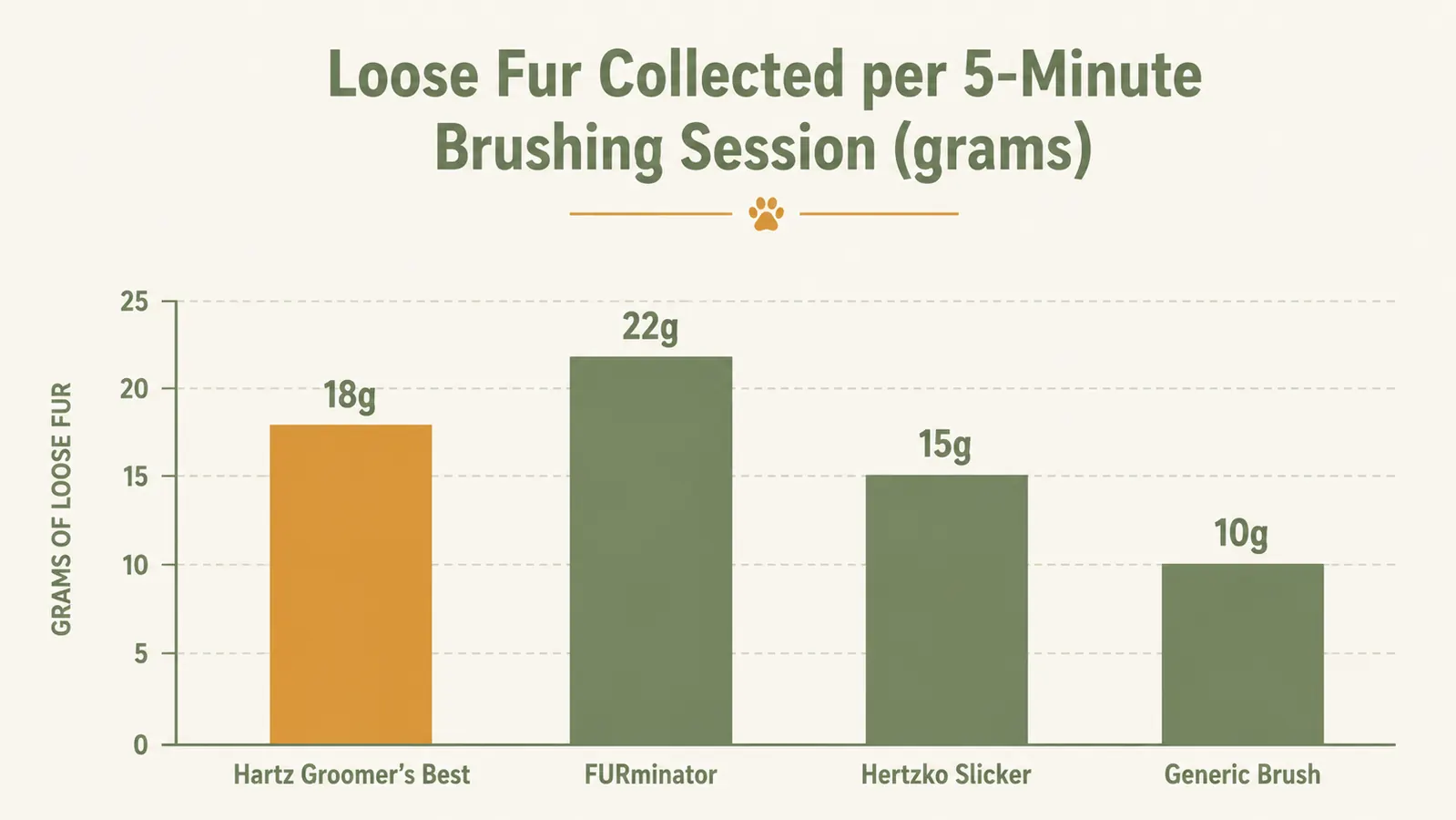
If you are comparing it to a FURminator or a similar deshedding tool in the same size range, the main difference is reach and price. The FURminator's blade-style edge pulls undercoat that this brush cannot. For a cat that sheds heavily or a Pomeranian in blow-coat season, that difference matters. For a short-coated small dog or a medium-coated cat on a maintenance schedule, the Hartz slicker does the job at a fraction of the cost. I cover that comparison in more detail in the Hartz vs FURminator breakdown if you want to think through which is right for your specific animal.
Most people grooming a cat or small dog do not need a deshedding tool for every session. They need a brush that removes loose coat efficiently without stressing the animal, and that they can clean in ten seconds between passes. This brush does those things. Whether it is enough depends entirely on your pet's coat type and how much undercoat you are dealing with.
Who This Is For
This brush is the right choice for owners of cats with short-to-medium coats, smooth-coated small dogs like dachshunds, Chihuahuas, and Rat Terriers, and any small dog with a medium single coat. It is also a solid pick as a secondary brush if you already own a deshedding tool and want something lighter for quick between-session passes. At this price it is an easy add to a grooming kit rather than a replacement for more specialized tools.
If your pet is cooperative and you groom regularly, the results are real. Olive still hates it, but she tolerates it, which is about as good as it gets with her. Biscuit and Penny both seem unbothered, and the reduction in furniture fur over the eight weeks has been worth the time. If you are looking for a starting point on building a proper grooming routine, the 10 grooming mistakes most pet owners make is a useful read alongside this one.
Who Should Skip It
Skip this if your dog weighs more than fifteen pounds or has a thick double coat, even at a small body size. Pomeranians, American Eskimo Dogs, and double-coated toy breeds shed in a way that requires real undercoat work, and this brush will not deliver that. Skip it also if you have a cat who is severely brush-averse and already reactive to fine-pin tools. The lack of a cushioned pad means mistakes are more noticeable, and a bad session can set back trust-building by weeks.
And skip it if you are grooming more than two or three small animals in one sitting on a regular basis. The handle fatigue is real, and there are brushes with better ergonomics in the fifteen-to-twenty dollar range that will serve a multi-pet household better over time.
If your cat or small dog is shedding onto everything you own, this is the brush most people in that situation end up buying, and most of them keep it.
The Hartz Groomer's Best Small Slicker has been rated by nearly 29,000 pet owners and holds a 4.5-star average. It is specifically sized for cats and small dogs, which matters more than most buyers realize before they choose. Check today's price and see if it makes sense for your situation.
Amazon Check Today's Price on Amazon →