
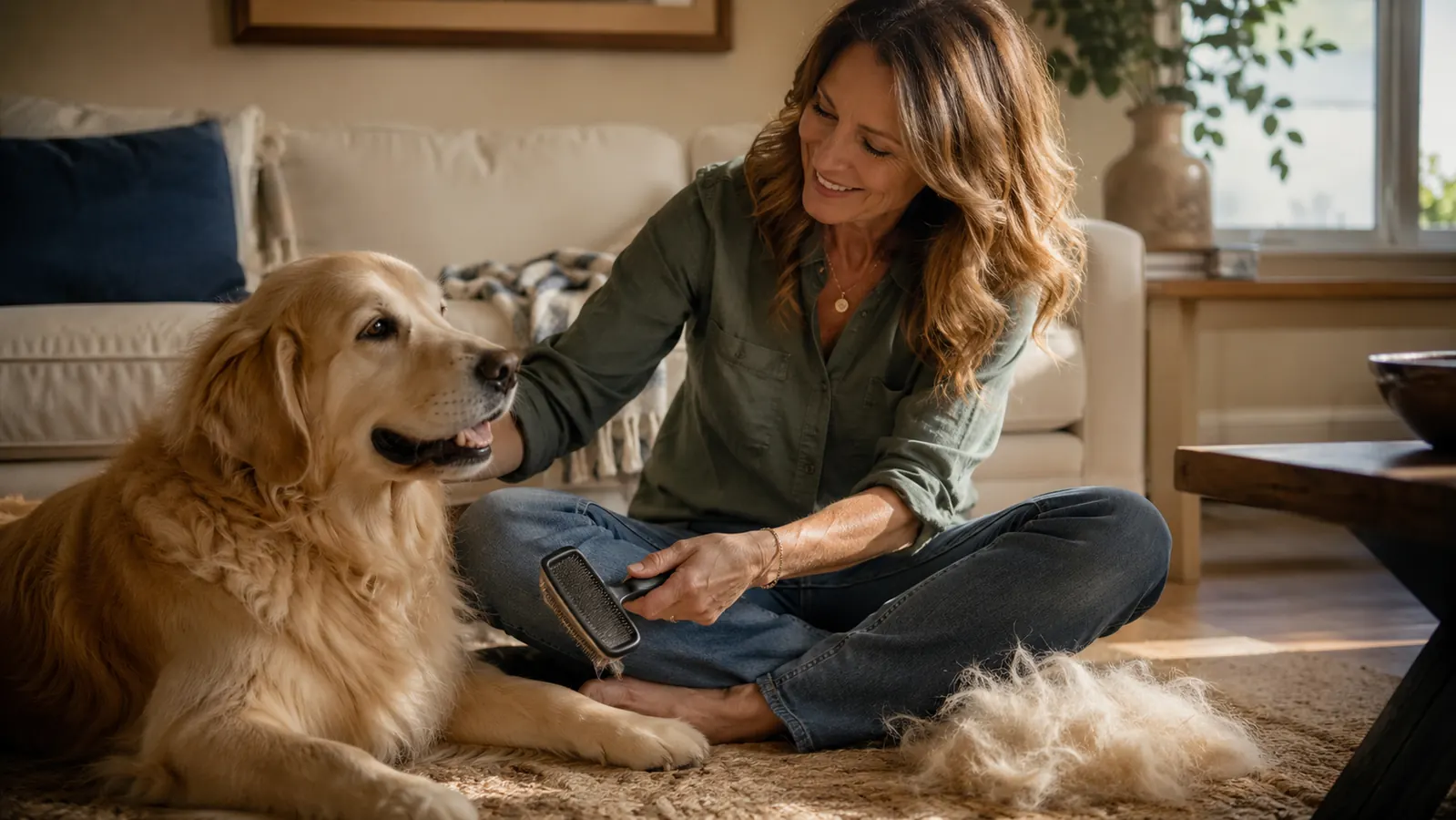
Here is the thing about a 4.5-star average with nearly 29,000 reviews: it tells you the product is not a disaster. It does not tell you about the pet owner who returned it after one session because their cat's skin turned pink, or the one who bought it for their beagle and could not figure out why it seemed useless, or the one who noticed a sharp plastic seam on the handle after twenty minutes. The star rating is an average, and averages flatten out the part of the story that actually helps you decide.
I have been using the Hartz Groomer's Best Small Slicker Brush on Mochi, my seven-pound short-hair tabby mix, and on Peanut, a fourteen-pound Shih Tzu mix with a medium-length double coat. I have a clear opinion now about what this brush is and what it is not. The short version: it works for a specific and limited use case. Outside that use case, you will probably return it. Let me be exact about where that line falls.
The Quick Verdict
A capable, inexpensive slicker for cats and short-coated small dogs, but it has real limitations on pin safety, build quality, and coat depth that the listing glosses over entirely.
Amazon Check Today's Price →Your cat or small dog is shedding onto every surface you own. This brush is budget-friendly and has more verified buyers than most grooming tools at five times the price.
The Hartz Groomer's Best Small Slicker has a 4.5-star rating from nearly 29,000 reviewers and is sized specifically for cats and small dogs. Before you spend more, check today's price and see if this solves the problem.
Amazon Check Today's Price on Amazon →What the Listing Does Not Tell You
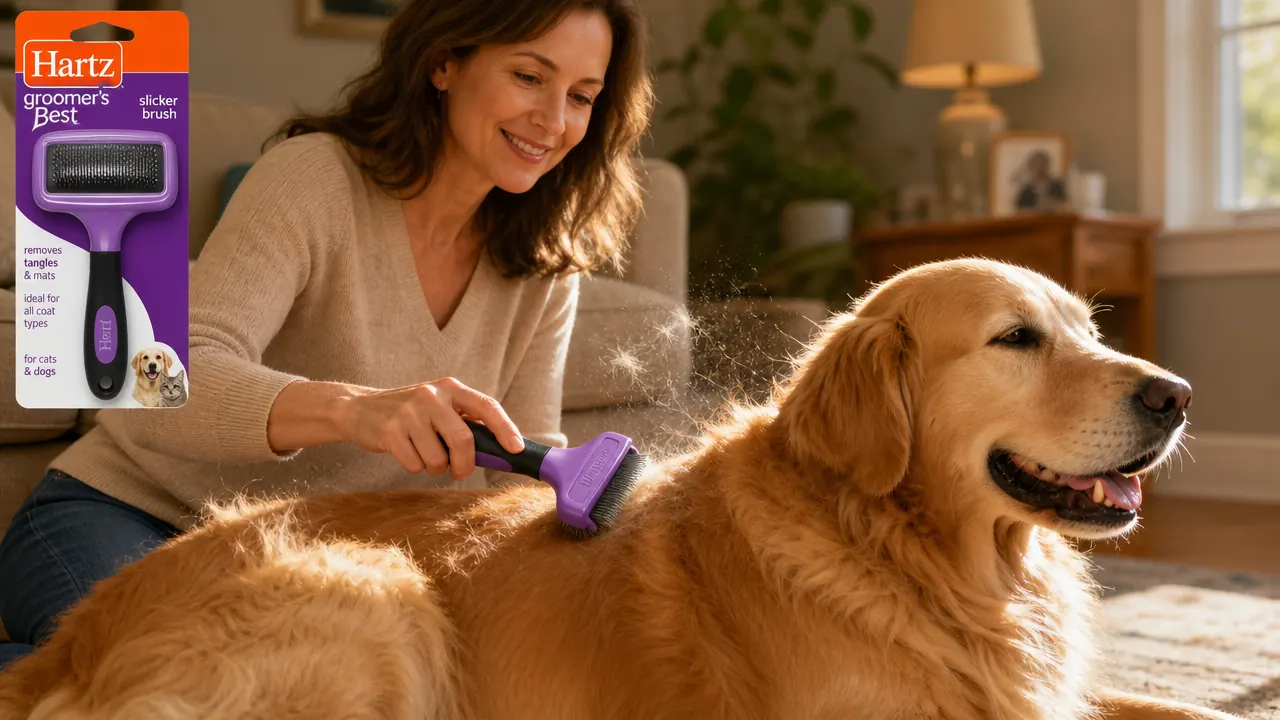
The listing shows the brush on a fluffy, cooperative-looking pet. It does not mention that the pins are fine-gauge bare wire with minimal tip rounding. On a dog or cat with a short single coat, fine bare pins and a rigid base with no cushioning means there is no give when you press down. The pins do not flex into a pad. They push straight into the skin. For most grooming sessions with a relaxed pet, this is fine. For a sensitive cat, a pet with any skin irritation, or an owner who presses down without thinking, it is not.
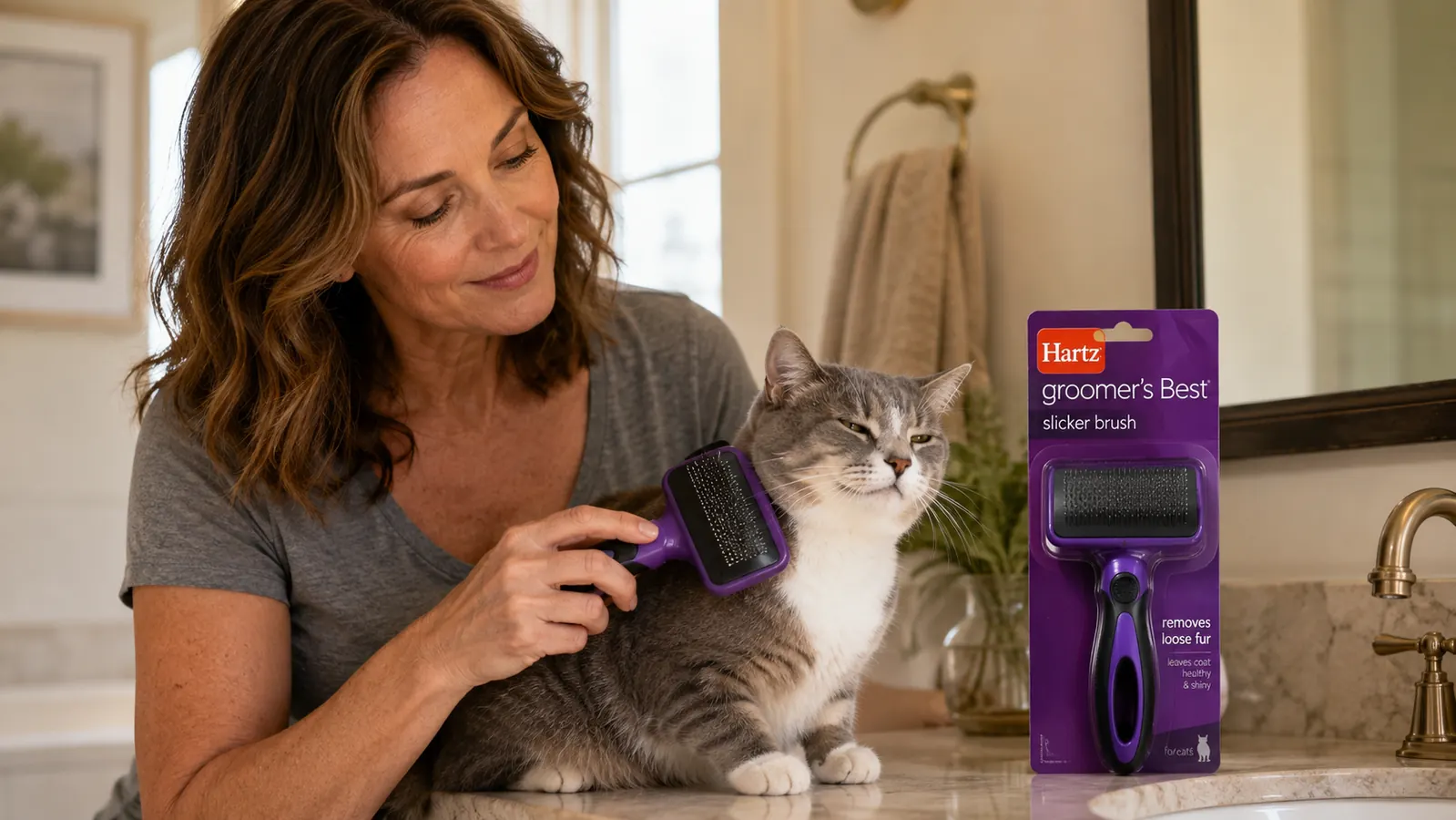
Mochi, my tabby, has average skin sensitivity. She tolerates grooming if I keep sessions under five minutes and stay off her belly. The first time I used the Hartz slicker on her with what I thought was light pressure, she flinched and pulled away twice in the first pass. I lightened up. She tolerated the rest of the session. But the experience was a reminder that this brush has less margin for error than a rubber-tipped slicker or a soft-bristle brush. The pins are working pins. They are doing a job, and they will do that job on skin if you are not careful.
This is not a reason to avoid the brush. It is a reason to start with very light strokes on any cat or small dog you have not groomed before, watch how they respond, and adjust. It is also a reason this brush is not suitable for elderly pets with thinning skin, pets with skin conditions, or pets already reactive to grooming tools. The listing says nothing about any of this.
The Cheap-Build Reality
The Hartz slicker is priced like a budget tool, and the materials confirm it. The handle is injection-molded plastic with a rubberized overmold on the grip side. The plastic seam where the two halves of the handle join runs along the top edge. On the first brush I used, that seam was slightly raised on one side. Over a grooming session of more than ten minutes it created enough pressure on my index finger to be uncomfortable. I filed it down with a nail file. Problem solved, but I should not have needed to.
The head is a flat plastic paddle with no flex. The pin base does not have a cushioned foam pad underneath, which is a feature you find on mid-range and premium slickers. That pad matters because it lets the brush conform slightly to the animal's body contours and absorbs some impact if you press too hard. The Hartz is rigid. Every ounce of pressure you apply goes directly through the pins. This makes feedback clearer if you are paying attention, and more punishing if you are not.
After about three months of regular use I noticed slight play at the neck junction between the handle and head. The brush still functions, but the tolerances on the molded joint are loose enough that repeated lateral force has introduced a faint wobble. That is consistent with the build tier this brush occupies, and it is not a dealbreaker for a home grooming tool used a few minutes a week. It is worth knowing before you buy.
The Size Limit Is Not a Suggestion
The listing says 'small dogs and cats.' That phrase is doing a lot of work, and I think a meaningful percentage of returns happen because buyers chose a pet outside that actual range. Let me be specific.
The brush head is roughly four inches across. That is the right size for a nine-pound cat or a ten-pound smooth-coated dog. On a dog over about fifteen pounds, you cover almost no surface area per stroke. You will spend twice as long on the session and still feel like you got nowhere. The pin depth is also shallow. On a single-coat animal or a very thin double coat, the pins reach the skin and lift loose guard hairs effectively. On any dog with real undercoat volume, the pins stop at the outer layer. You are not reaching the shed undercoat, and the dog still blows their coat onto your furniture.
Peanut, my Shih Tzu mix, is fourteen pounds with a classic double coat: long fine outer layer and a soft dense undercoat underneath. This brush moves the outer layer and picks up some loose topcoat. It does not address the undercoat. For Peanut, a slicker session is a starting step, not a complete groom. I follow it with a metal comb and a deshedding rake around her back end. If you have a double-coated small dog and expect the Hartz slicker to handle everything, you will be disappointed.
The size limit is not a suggestion. Buying this for a dog over fifteen pounds or any pet with real undercoat is the most common reason people return it, and the listing does not give you enough information to see that coming.
The reverse is also true: for an animal squarely inside the intended size and coat range, this brush works. Mochi, with her short single coat, responds well to it. Sessions are quick, the loose fur collects on the pins efficiently, and the small head does not overpower a cat the way a wider grooming tool does. The size is an asset when it matches the animal. It becomes a liability the moment you reach outside that range.
Pin Spacing, Fur Removal, and What Actually Works
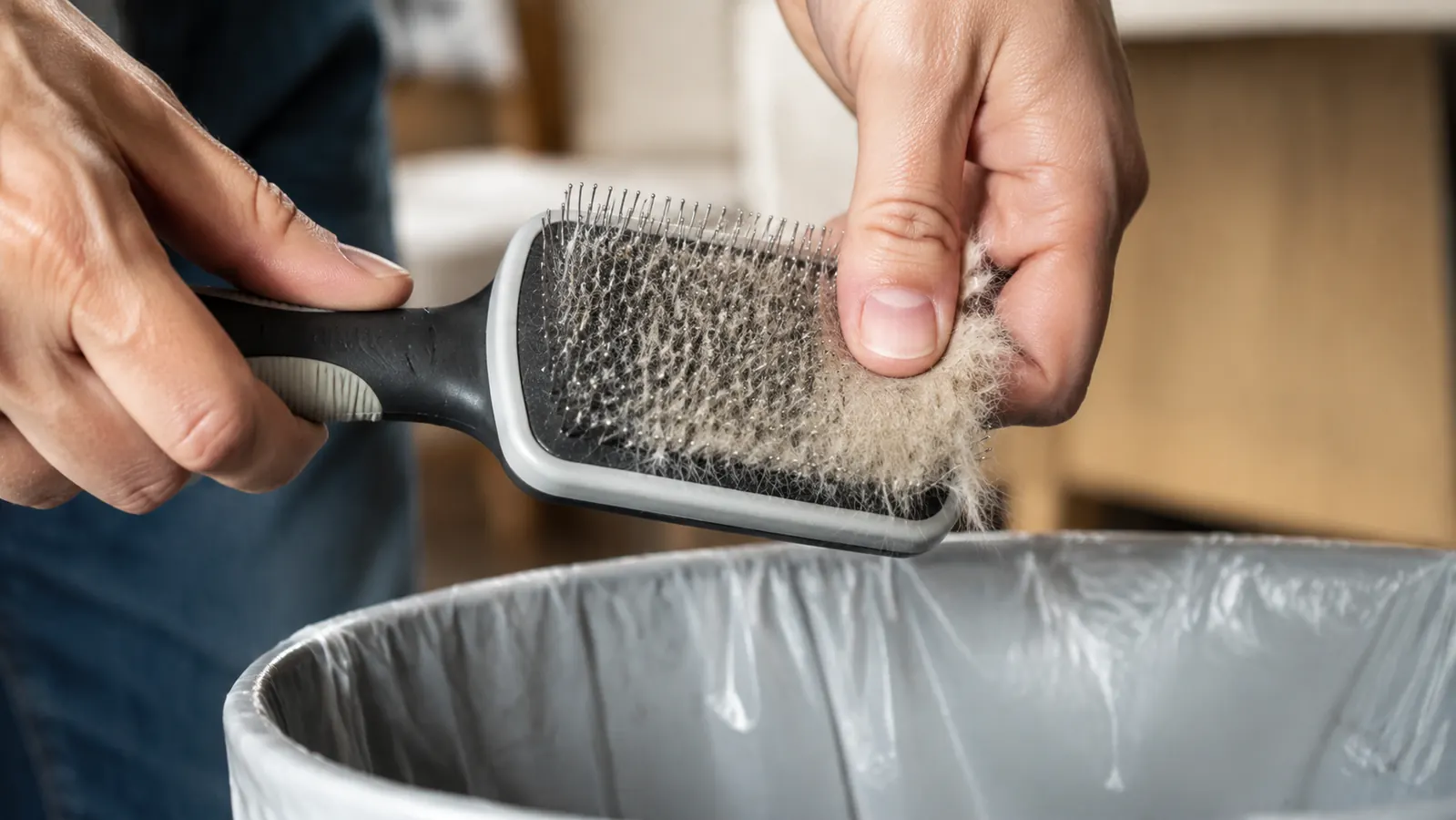
Setting aside the caveats, here is what the brush does well. The pin spacing is medium-close, close enough to catch loose fur in a single pass without pulling on the live coat. On Mochi's short fur, one firm pass down the back fills the pin area visibly. A second pass picks up less. By the third pass the brush needs clearing.
Clearing is easy. Press your thumb sideways across the pin face and the collected fur releases in one clump. No pick tool, no rinse. This is a genuine advantage of a rigid-base design: cleanup is faster than with cushioned-pad brushes where fur wads into the foam. If you have a cat who sheds constantly and you do quick touch-up sessions every few days, that fast cleaning matters.
The fur removal itself is noticeable. Within the first two or three sessions on a pet that has not been regularly brushed, you will pull out enough loose coat to wonder how the animal was not itching constantly. The pins work. The question is whether they work for your specific pet's coat type, not whether they work at all.
Who Returns This Brush and Why
Based on the one-star reviews and my own experience with Peanut, the returns cluster into three groups. The first group bought it for a dog that was too big. A standard beagle is twenty pounds. A cocker spaniel is twenty-five. A corgi's undercoat alone overwhelms the pin depth of this brush. These buyers try it, feel like they are barely touching the coat, and send it back. That is a mismatch problem, not a brush defect.
The second group has a cat or small dog with sensitive or reactive skin and found the rigid pin contact caused redness or made the pet resist grooming. A cat with flea allergy dermatitis, a dog with chronic dry skin, or a senior pet with fragile skin is not the right candidate for this brush. Those pets need a softer tool. The listing does not say this, so buyers find out after the fact.
The third group had build quality issues: a pin worked loose, the handle cracked at the neck, the seam was sharp enough to cause discomfort. These are real but not common complaints, and they are consistent with what you get at this price tier. For a home grooming kit used once or twice a week, the build is probably fine. For daily professional use, it is not.
When This Brush Is Not Enough
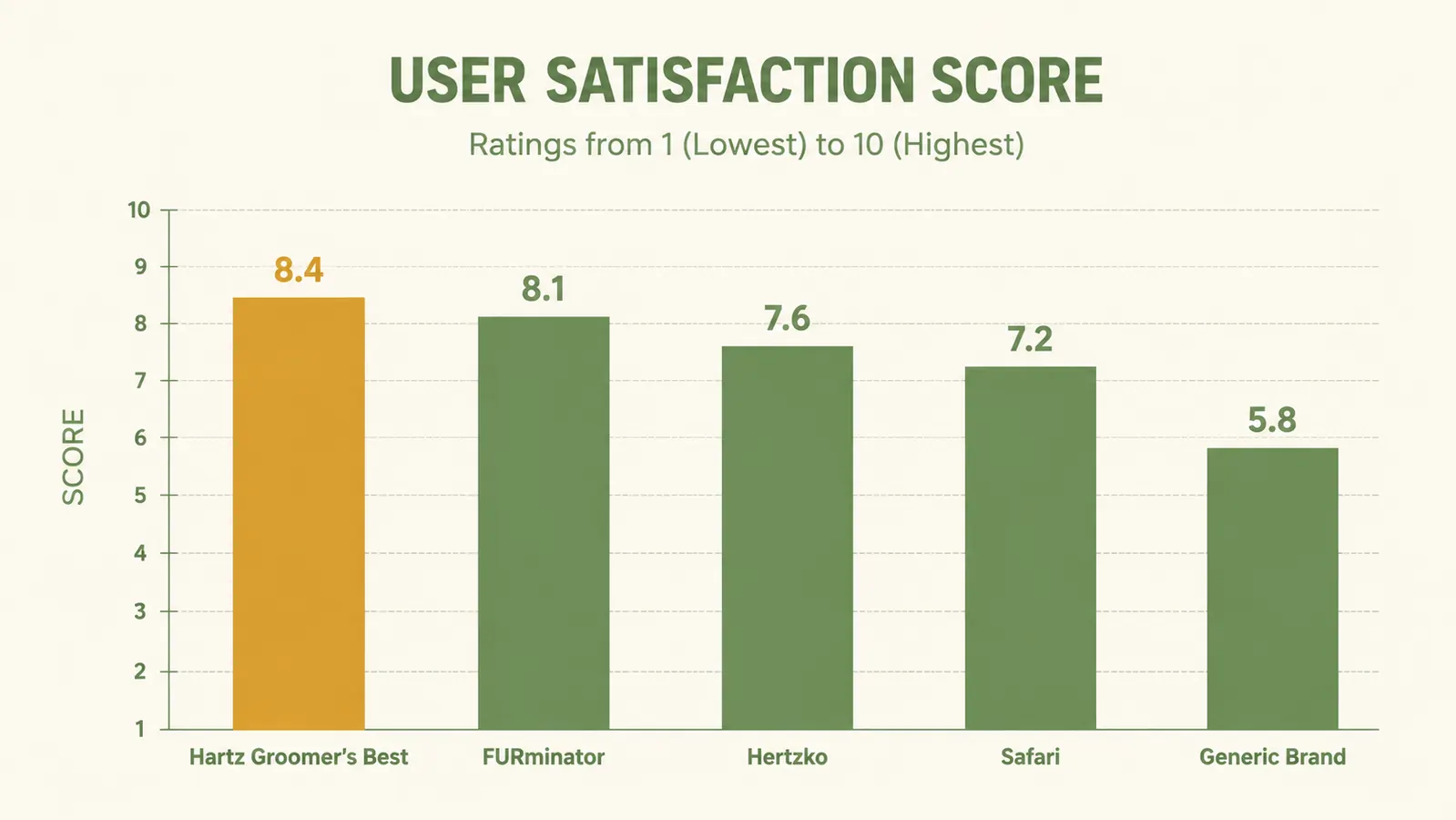
Double-coated small dogs in blow-coat season need a deshedding tool, not a slicker. When a Pomeranian or a Sheltie drops their undercoat twice a year, the volume is enormous and the undercoat is dense below the outer layer. A slicker is for maintenance. You need a deshedding rake or a dedicated tool for seasonal shedding. The comparison of the Hartz slicker against the FURminator breaks this down specifically if you are trying to decide which tool handles which job.
Any cat with long fur and a tendency to mat needs a metal comb as the primary tool. The Hartz pins will move through the top of the coat and can tighten a mat by catching on it without breaking it up. On a Maine Coon, a Persian, or any long-coated cat, this brush is a finishing step after the comb has done the real work. Using it as the primary tool on a matted coat will make the mat worse.
If you are also making common grooming mistakes that compound these limitations, it helps to catch those before you invest in any tool. The grooming mistakes most pet owners make covers several that directly affect whether a slicker brush performs the way you expect.
What I Liked
- Fine-wire pins remove loose topcoat quickly on short-coated cats and small dogs
- Small head is useful for cats and toy breeds, allows precision around the face and ears
- Fast one-thumb cleaning with no tools required
- Lightweight enough that small pets are not overwhelmed by the tool
- Easy to replace if it wears out, given the price
Where It Falls Short
- Rigid pin base with no cushioned pad leaves no margin for heavy-handed use on sensitive skin
- Bare wire pin tips have minimal rounding, real scratch risk on reactive or thin-skinned pets
- Shallow pin depth does not reach undercoat on double-coated small dogs
- Head too small for any dog over about fifteen pounds, severely limits grooming efficiency
- Handle seam and molded neck joint show budget build quality after sustained use
- Not appropriate for elderly pets, pets with skin conditions, or long-coated cats as a standalone brush
Using It Without Hurting Your Pet
The pins on this brush are not safety-tipped in any meaningful sense. The slight bend at the pin end reduces snagging on the coat, but it does not blunt the tip. If you press down hard, you are dragging wire across skin. Keep your wrist loose, let the weight of the brush do the work rather than adding hand pressure, and use short strokes. For cats, start at the shoulders and work toward the tail. The neck and face are more sensitive and most cats are reactive there. Keep sessions under five minutes until you know how your specific pet responds, and stop before they tell you to. A short cooperative session every few days beats a long tense one once a week, every time.
Who This Is For
This brush is the right buy for cats with short or medium single coats and smooth-coated small dogs like Chihuahuas, Italian Greyhounds, Rat Terriers, or Miniature Pinschers. It also works as a secondary brush for lightly double-coated small dogs if you already own an undercoat tool for the heavy work. At the current price it fits into a grooming kit as a maintenance brush without asking you to commit to it being the only tool you own.
If you groom your pet in frequent short sessions rather than long infrequent ones, this brush suits that habit. The fast cleanup and lightweight feel make it easy to grab for a two-minute touch-up, which is the routine that actually keeps furniture fur manageable. That kind of consistency is more effective than one thorough session a month.
Who Should Skip It
Skip it if your pet weighs more than fifteen pounds, has a double coat with real undercoat volume, has skin sensitivities or any skin condition, or is a senior with thinning skin. Skip it if your cat is already brush-averse and you are working on rebuilding trust around grooming. The rigid pin contact is not the right reintroduction for a reactive cat.
Skip it also if you expect it to be the only grooming tool for a long-coated small breed. A Maltese or Yorkshire Terrier in full coat needs a comb as the foundation, with the slicker as a finishing step. Trying to manage that coat with a slicker alone is the wrong tool for the job, and the brush will disappoint you regardless of its star rating.
If your cat or small dog has a short coat and you want an inexpensive grooming tool that actually collects loose fur, this is the most widely tested option in this size and price range.
The Hartz Groomer's Best Small Slicker has nearly 29,000 ratings and a 4.5-star average. This review has been honest about its limitations. For the right animal and the right coat type, it does what a grooming brush should do. Check today's price and see if it fits your pet's situation.
Amazon Check Today's Price on Amazon →