

My beagle Rosie turned nine last spring. She was not limping. She was not yelping. She was just... slower. Taking the porch steps one at a time instead of bounding down them. Finishing her morning walk in twelve minutes instead of twenty. I kept telling myself she was tired, that she had a bad night, that it was the heat. It was not the heat. I wish I had caught it sooner, and I think most people are in the same boat.
Joint issues in dogs almost never announce themselves loudly. They show up in small behavioral shifts that are easy to write off as personality or age. The list below covers the ten signs I have seen in Rosie, heard from other owners in the vet waiting room, and read about in the clinical literature on canine osteoarthritis. If your dog is hitting three or more of these, it is worth taking a closer look. And if they are already on a joint support supplement, keep an eye on whether these behaviors are improving.
If your dog is showing even a few of these signs, this is the supplement I use on Rosie every single day.
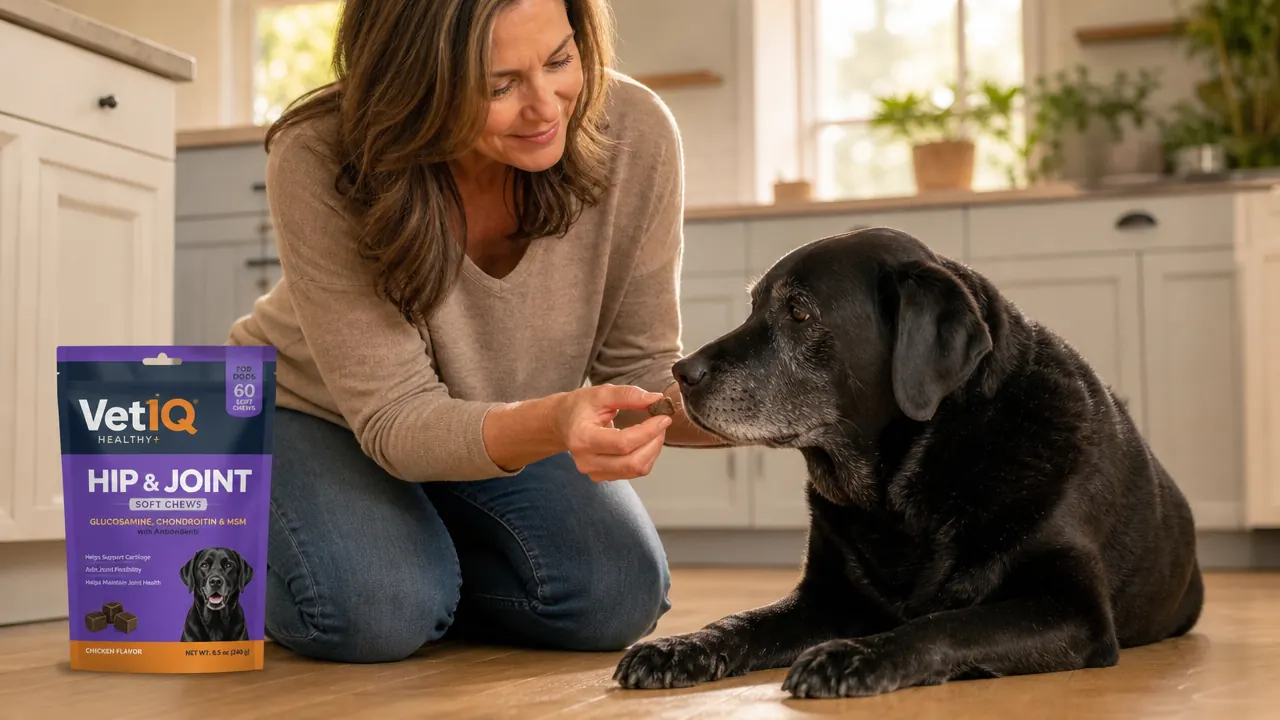
VetIQ Glucosamine Hip and Joint Soft Chews have over 29,000 Amazon reviews and a 4.6-star rating. Rosie eats them like treats. They contain glucosamine, MSM, and chondroitin at doses that match what vets typically recommend for small and medium breeds. I break down the full experience in my detailed review.
Amazon Check Today's Price on Amazon →Hesitating at the Bottom of the Stairs
This was the first thing I noticed with Rosie. She used to race up and down the stairs without a thought. Then one morning she stood at the bottom and just looked at them. She went up eventually, but she paused at each step. Stairs require the hips and knees to flex under the dog's full body weight. When that motion is uncomfortable, dogs will hesitate, slow down, or start using only one side of their body to push off. If your dog used to take stairs without breaking stride and now stops to think about it, that is a joint signal worth taking seriously.
Slowing Down on Walks They Used to Love
A dog that used to pull on the leash and now lags behind is not necessarily bored or distracted. When extended movement causes joint discomfort, dogs self-regulate by slowing down or stopping. Rosie started sitting down about halfway through our usual route, which she had never done before. Pay attention to distance and pace over several weeks, not just one walk. A consistent pattern of earlier fatigue or shorter comfortable range is a joint issue until proven otherwise.
Stiffness After Resting
Dogs with joint trouble are often stiffest right after they wake up or after a long rest. You will see them stand up slowly, take a few creaky steps, and then loosen up after a couple of minutes of movement. This is called "start-up stiffness" in veterinary notes, and it mirrors what humans with arthritis describe in the morning. If your dog wobbles or moves gingerly for the first few minutes after lying down, that is inflammation in the joint working against them. It tends to ease with warmth and movement, which is exactly why it gets ignored so often.
Reluctance to Jump onto the Couch or into the Car
Dogs who once launched themselves onto furniture without hesitation and now stand at the edge, back and forth, are often protecting a joint. The landing impact on a couch or the push-off required to jump into an SUV is significant load on the hips, knees, and shoulders. Rosie stopped jumping into the back seat of my car about two months before I started her on a joint supplement. I started using a small step, which helped, but the supplement is what made her willing to try without it again.
Licking or Chewing at One Specific Leg or Hip
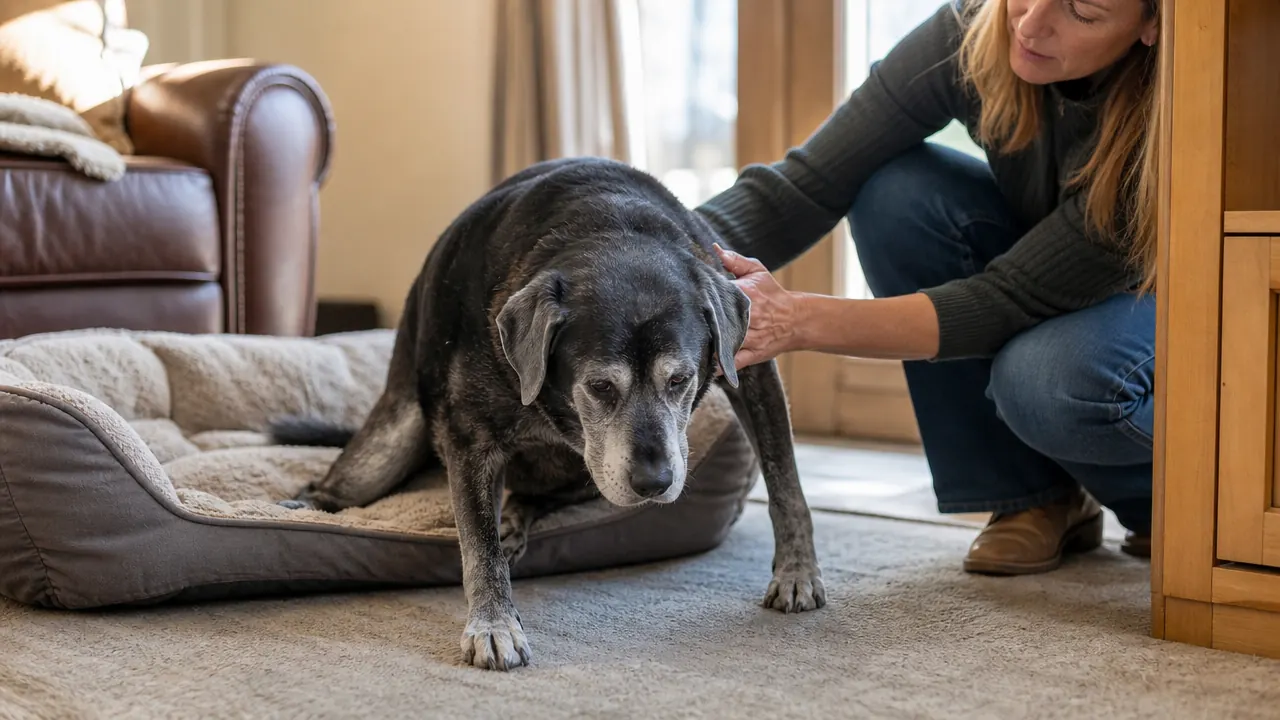
Dogs cannot point to where it hurts. They lick. Obsessive licking or chewing at a specific leg, knee, or hip area that has no visible wound or skin issue is often a sign the dog is trying to soothe a deeper discomfort. The behavior can look exactly like allergies or boredom at first glance, which is why it gets misread so often. If the licking is always in the same spot, and you rule out a topical skin issue, ask your vet about joint pain in that area.
Muscle Loss Around the Hips or Rear End
This one is subtle and most owners miss it entirely. When a joint is painful, dogs naturally reduce their use of that limb or region to protect it. Over weeks and months, the surrounding muscles atrophy from disuse. You may notice the rear end looking slightly narrower or flatter than it used to. Run your hand along both sides of the hips and compare. Uneven muscle mass on one side is a significant clinical indicator that a limb is being offloaded. A glucosamine and MSM supplement can address the joint itself while you also work on keeping the surrounding muscles active with gentle exercise.
Amazon Support healthy joint use with glucosamine and MSM → →
Rosie was not limping. She was not yelping. She was just slower. And that is exactly how joint trouble hides until it gets worse.
Sleeping More and Avoiding Playtime
This was the one that surprised me the most, and it is number 7 for that reason. I assumed Rosie was just getting older and calmer. Dogs do mellow with age, but there is a difference between a calmer personality and a dog who is actively avoiding movement because it hurts. When Rosie started skipping the evening tug session she used to beg for, I thought she had grown out of it. She had not. Within about three weeks of starting her on VetIQ joint chews, she was picking up toys again. It was not her age. It was her joints.
Visible Limping That Worsens After Exercise
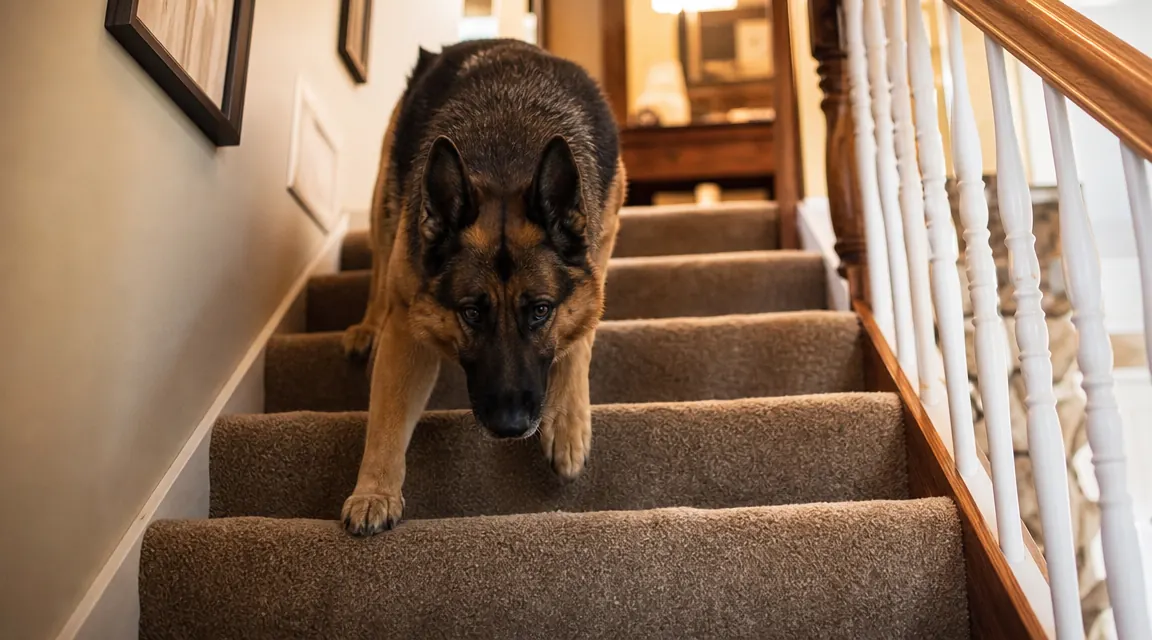
Once joint trouble progresses past early-stage discomfort, you will see intermittent or persistent limping. It is common for the limp to be barely noticeable at the start of a walk and more pronounced at the end, when inflammation has built up from repeated impact. Some dogs limp for a day after a vigorous play session and then seem fine, which leads owners to dismiss it. A limp that reliably appears after activity is not random. It is the joint telling you it cannot absorb load the way it once could. See your vet, and in the meantime a daily joint supplement with glucosamine can help support the cartilage that is doing the absorbing.
Yelping When Touched in a Specific Spot
Most dogs are not dramatic about pain. If your dog flinches, pulls away, or yelps when you touch a hip, shoulder, knee, or elbow, that is direct pain feedback. Healthy joints do not hurt when pressed or manipulated. This is one of the more advanced signs, meaning the underlying issue has probably been building for a while before the dog reacts visibly. Do not wait for a yelp before starting a joint supplement. The earlier signs are the ones to act on. But if you are already at this stage, get a vet appointment and start a glucosamine supplement the same day.
Unexplained Grumpiness or Irritability
A normally friendly dog that starts growling when touched, snapping when approached while resting, or becoming generally short-tempered has not changed personalities. Chronic pain makes dogs irritable the same way it makes people irritable. They are not being bad. They are hurting and they do not have another way to communicate it. If a dog's temperament shifts and there is no obvious trigger like a new pet, a move, or a change in routine, rule out physical pain first. Joint pain in particular tends to be low-grade and constant, exactly the kind of thing that grinds away at a dog's patience over time.
Amazon Help an uncomfortable dog feel like themselves again → →
What I'd Skip
I tried two other joint supplements before landing on VetIQ. One was a powder that Rosie flat-out refused to eat no matter what I mixed it into. The other was a chew that crumbled apart in the bag by the time I opened it. I would skip any joint supplement that comes in powder or pill form if you have a picky dog. I would also skip anything that lists "proprietary blend" without showing you the actual milligrams of glucosamine and MSM per serving. The dose matters. A glucosamine supplement with 100 mg per chew is not doing the same work as one with 500 mg. VetIQ publishes the numbers on the label, which is a basic thing that not everyone does.
I also want to be clear: if your dog is already limping or yelping, a supplement is not a replacement for a vet visit. It is a support tool, not a treatment. Get the diagnosis first, then build the daily support routine around it. If you want to see the full picture on how VetIQ performed over three months of daily use on Rosie, the detailed review is on this site.
Rosie shows fewer than two of these signs now. She is nine years old. Daily joint support made the difference.
VetIQ Glucosamine Hip and Joint Soft Chews are what I give her every morning. Soft chew format, no pill grinding, no powder hiding. The ingredient panel shows the actual glucosamine and MSM milligrams per serving. Over 29,000 reviews on Amazon with a 4.6-star rating. If your dog is showing early signs, now is a better time to start than when things get worse.
Amazon Check Today's Price on Amazon →