
My cat Miso is nine years old and could fill a room with a single visit to her litter box. I do not say that to be dramatic. I say it because I spent two years buying scented litter, air freshener sprays, and eventually an expensive self-cleaning gadget that jammed every three days, and none of it solved the underlying problem. The smell was not a product problem. It was a process problem.
When I added a second cat, Pinto, the situation got worse fast. Two cats, one cramped hooded box, a scooping schedule I kept letting slip to every other day. My front hallway smelled like a gas station restroom. After trying basically everything the pet store aisle sells, I landed on a system that keeps the odor genuinely under control without a robot, without plug-in deodorizers running constantly, and without spending heavily on a litter box. The foundation of that system is a good sifting tray with Microban antimicrobial protection built into the plastic, specifically the Arm & Hammer Large Sifting Litter Box. But the box alone is not enough. Here is the full routine.
If your litter box smells even an hour after scooping, the box itself may be trapping odor in scratched plastic.
The Arm & Hammer Large Sifting Litter Box uses Microban antimicrobial protection built into the tray material to inhibit the bacteria that cause odor between cleanings. Over 54,000 Amazon ratings at 4.4 stars. Made in the USA.
Amazon Check Today's Price on Amazon →Step 1: Pick the Right Box for the Job
Most litter box odor problems start with the box itself, specifically with scratched and pitted plastic that traps bacteria no matter how often you scoop. Once plastic gets gouged by cats digging aggressively, it holds odor between cleanings in a way that is nearly impossible to scrub out. This is why buying a new scented litter does not fix the smell in an older box. You are applying fragrance to a bacterial problem.
The Arm & Hammer sifting tray solves this in two ways. First, it uses Microban antimicrobial protection built into the plastic itself, not a surface coating that washes off. Microban inhibits the growth of odor-causing bacteria, mold, and mildew in the tray material so that even in the hours between your scooping sessions the box is not actively generating more smell. Second, the sifting design means you are physically removing waste every time you scoop rather than raking it back into the litter repeatedly.
If you have a hooded box, I would encourage you to pull the hood off for a week and see if your cat is happier and the smell is actually better. Covered boxes trap ammonia inside with the cat, which is unpleasant for them and pushes a concentrated burst of odor into the room every time the door flap moves. Open trays ventilate continuously. The Arm & Hammer box is open by design, and that is not a design flaw. I made the switch from a covered box to this open tray about a year ago and the change in ambient smell was noticeable within two days. Miso also started using the box more readily, which is its own useful signal.
Step 2: Set Up the Sifting System Correctly
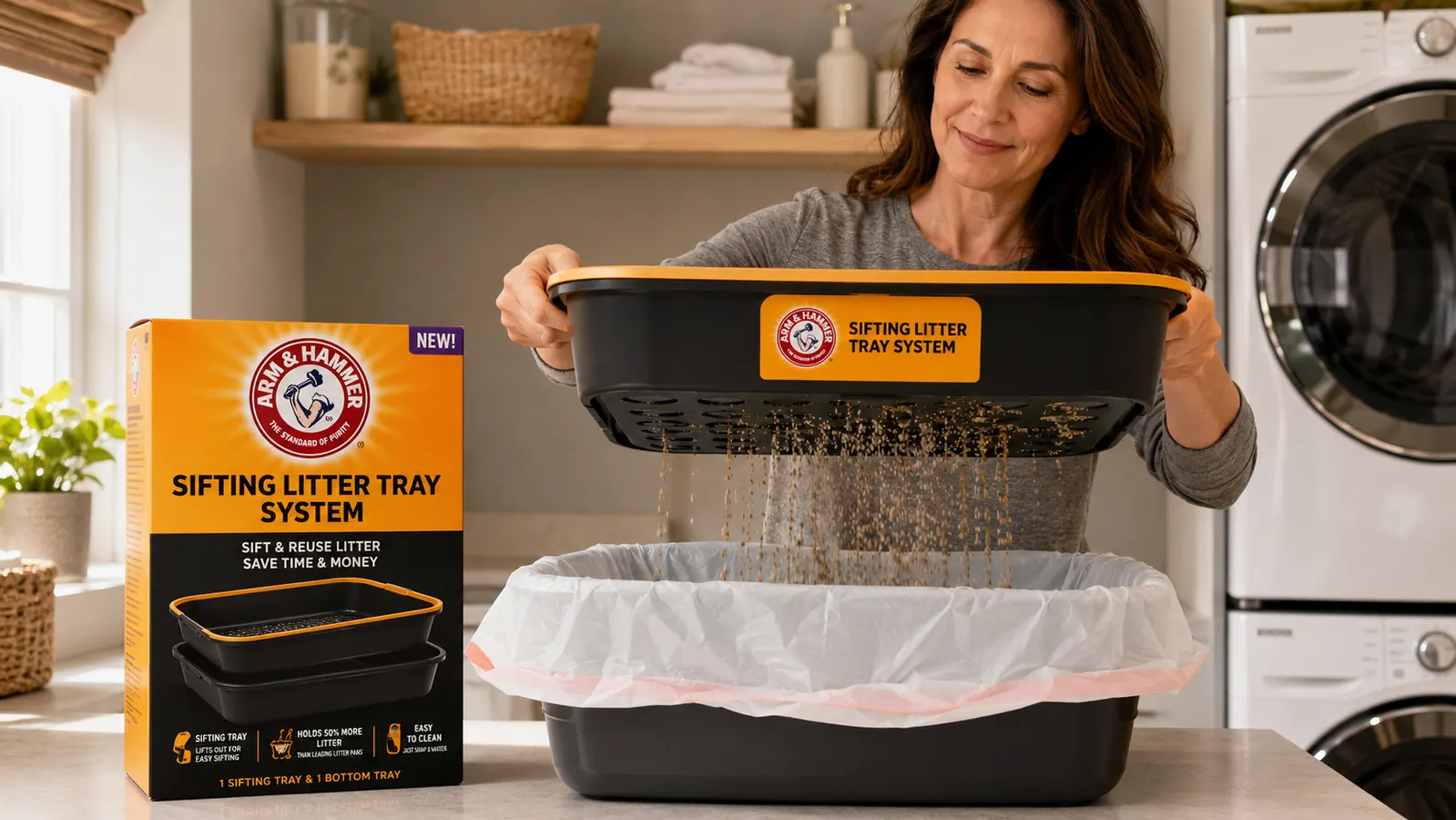
The Arm & Hammer sifting litter box comes with three trays: two solid base trays and one sifting tray with a slotted bottom. The setup is simple but I see people get it wrong in reviews. Stack one solid base tray on the bottom, place the sifting tray inside it, then pour your litter into the sifting tray. The second solid tray sits off to the side and is where clean litter lands when you sift.
When you scoop, you lift the sifting tray straight up. Clumps stay on top of the slots, clean litter falls through into the base tray below. You dump the clumps into a waste bag, then set the now-empty sifting tray aside on the floor or on a mat, slide the clean-litter base tray into position, and drop the sifting tray back on top. Alternate which tray is the base each time and the rotation keeps the system clean. It sounds like three steps but once you have done it twice it takes about forty-five seconds.
One thing I learned early: do not use fine-grain clumping litter with sifting trays. Fine grains fall through the slots before they form clumps, leaving waste residue in the clean litter below. Stick with a medium-grain or coarser clumping formula. I use an unscented clumping litter because the sifting system removes waste so efficiently that I do not need the litter itself to carry deodorizing duty.
For the litter depth, three inches is the minimum for proper clump formation. Anything shallower and urine hits the tray floor before it can clump, which means it soaks into the plastic instead of lifting out cleanly.
Step 3: Stick to a Scooping Frequency That Actually Works
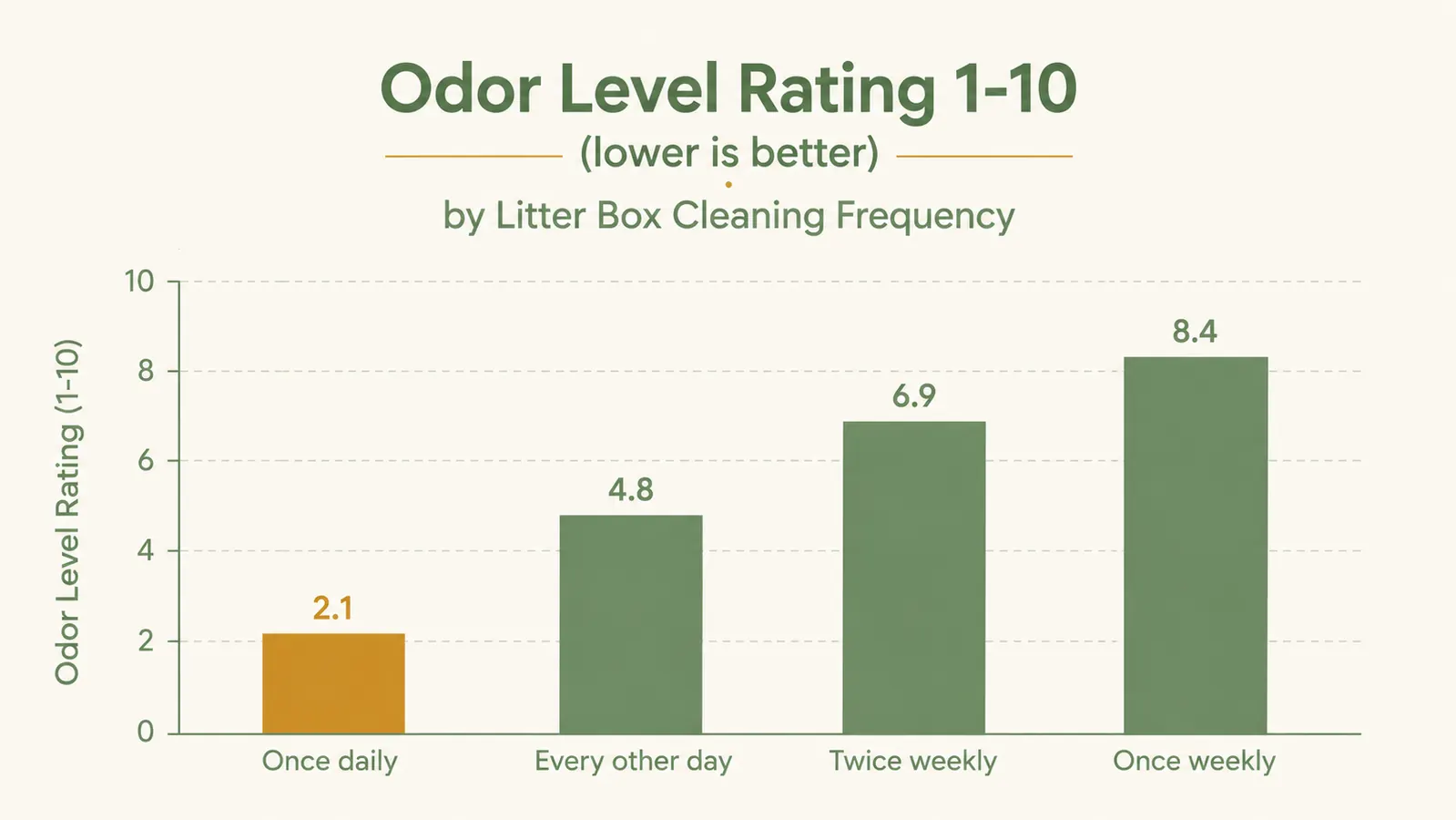
Here is the rule I follow and it is non-negotiable: one cat means once daily minimum. Two cats means twice daily, or at bare minimum morning and evening. If you are only scooping every other day with a single-cat household, no product will save you. The bacteria that cause ammonia smell multiply within hours, not days. By the time you hit the 48-hour mark without scooping, the damage to the ambient air in that room is already done.
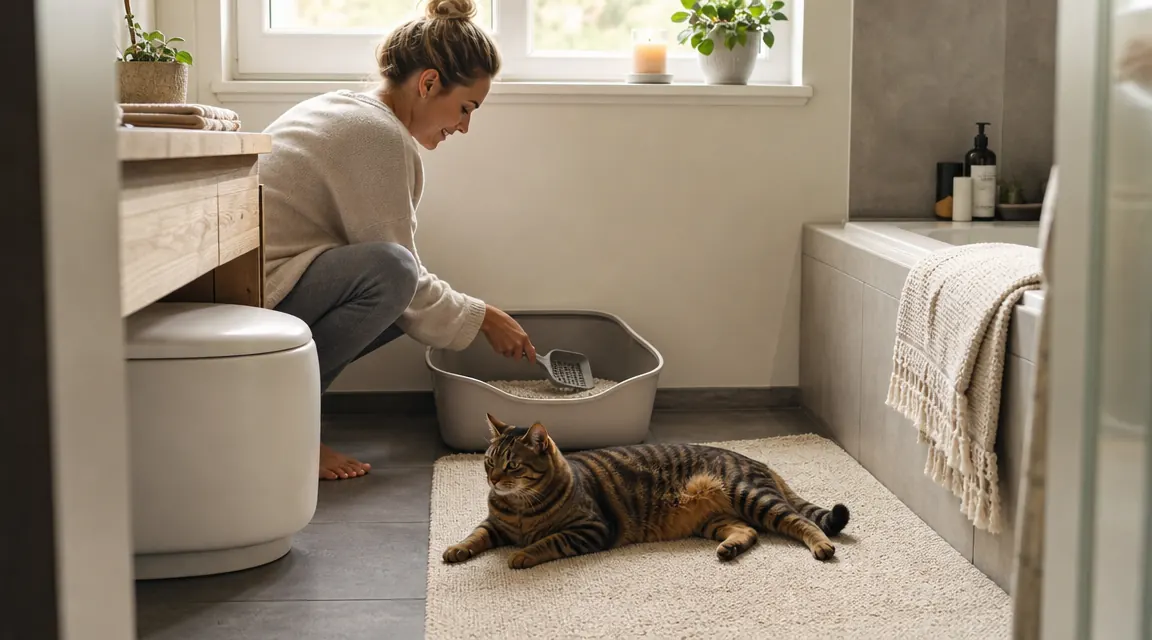
The sifting design makes twice-daily scooping genuinely fast, which is the main reason I kept up with it when I failed to stay consistent with my old standard scoop-only box. The rotation takes less than a minute. That is a threshold I can meet even at 6 AM before coffee. If the friction of scooping is why your schedule slips, switching to a sifting tray often fixes the schedule problem, not just the mechanics.
If you have multiple cats, the general guideline is one litter box per cat plus one extra. Two cats means three boxes ideally. I run two boxes for Miso and Pinto and the system holds, but I am disciplined about twice-daily scooping. If you can only manage once daily, you need that third box. More surface area means less concentration of waste per box, which directly reduces peak odor.
One practical trick I use to stay consistent: I tie scooping to something I already do without thinking. Morning scoop happens right after I feed Miso and Pinto, before I make my own breakfast. Evening scoop happens when I brush my teeth before bed. Habit stacking is not a new idea but it genuinely works for litter maintenance in a way that setting a phone reminder never did for me. The box gets scooped every single day now, not because I am disciplined in some abstract sense, but because it is attached to habits that already run on autopilot.
Step 4: Place the Box Where Ventilation Works in Your Favor
Litter box placement does more for odor control than most people give it credit for. The two worst spots are enclosed closets with no airflow and high-traffic rooms where smell concentrates. The best spots are rooms or areas with passive ventilation: a bathroom with a door you can leave slightly open, a laundry room with an exhaust fan, or a basement corner with a small window that stays cracked.
If you have no choice but to put the box in a small room, a simple bathroom exhaust fan running on a timer set for 30 minutes after peak use times (morning and evening feeding) does more than any plug-in deodorizer. Plug-ins add fragrance on top of odor. An exhaust fan removes the odor molecules from the air entirely. These are not the same thing, even though the pet aisle markets them as equivalent solutions.
Keep the box away from your cat's food and water bowls. Cats are reluctant to use a box that is near their eating area, which leads to avoidance, which leads to accidents outside the box, which creates a much worse odor problem than any litter box ever will. Six feet of separation is a reasonable minimum. The box should feel, from the cat's perspective, like a private area that is functionally separate from where they eat and sleep.
Step 5: Deep-Clean the Box on a Regular Schedule
Even with Microban protection and consistent daily scooping, every litter box needs a full empty-and-wash cycle. The Microban in the Arm & Hammer tray inhibits bacterial growth in the plastic but it is not a substitute for physical cleaning. Dust, fine litter particles, and residue accumulate in the tray over time and eventually overwhelm any antimicrobial material.
My schedule is a complete dump and wash once every two weeks for a two-cat household. Empty the tray entirely, scrub with warm water and a small amount of unscented dish soap, rinse thoroughly, and let it air dry completely before refilling. Do not use bleach or ammonia-based cleaners. Bleach residue on a litter tray smells like a chemical spill to your cat and can cause avoidance. Hot water and dish soap is sufficient.
When you wash the trays, inspect the plastic for deep gouges. Cats that dig hard will score the plastic over time, and once those grooves are deep enough they harbor bacteria even between washes. The Microban protection slows this process significantly compared to plain plastic trays, but it does not prevent physical wear. When you start seeing deep scratches that you cannot clean out, the tray has earned retirement. For the current price of the Arm & Hammer box, replacing it every 12 to 18 months is still vastly cheaper than any self-cleaning robot alternative.
What Else Helps
A few things I have added to the routine that make a measurable difference: an activated charcoal odor absorber placed near the box rather than inside it (they work by pulling molecules from the air, not from litter), a litter-catching mat in front of the tray that reduces tracking so litter dust does not spread to carpet, and feeding Miso and Pinto on a consistent schedule rather than free-feeding. Cats that graze all day produce waste unpredictably throughout the day. Cats on a meal schedule tend to use the box more predictably, which means your scooping sessions catch waste before it has been sitting for hours. It is a small thing but it adds up. None of these are expensive. The mat costs a few dollars. The charcoal absorber lasts a month. The feeding schedule costs nothing. They work best when the underlying system, the right box, the right litter depth, and the right scooping frequency, is already in place.
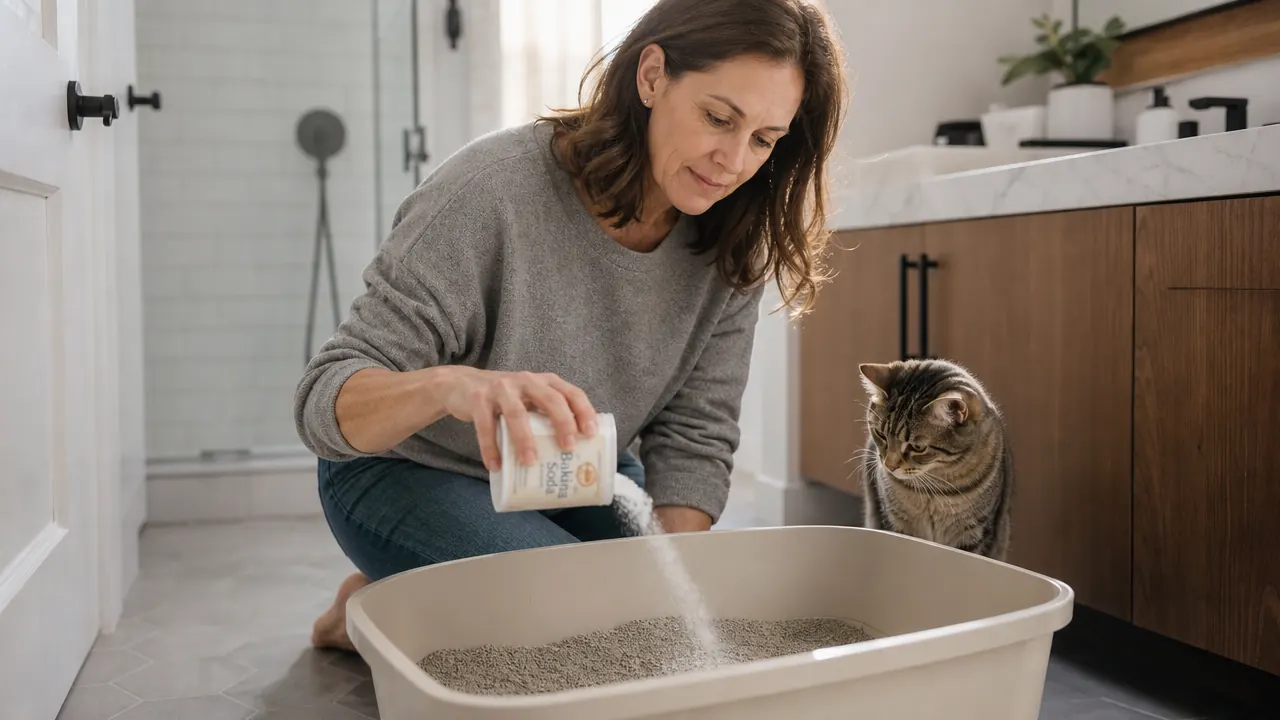
One more thing worth mentioning: baking soda sprinkled lightly on the bottom of the tray before you add fresh litter helps absorb ammonia between scoops. Use a thin layer, not a pile. Too much and it raises the pH of the litter in ways that can interfere with clump formation. A light dusting on the bare tray, then your three inches of litter on top, is enough to make a difference without causing problems. I have been doing this for about eight months and it is a consistent improvement over skipping it entirely.
The smell was not a product problem. It was a process problem. Once I fixed the process, the sifting tray with Microban did the rest.
Ready to stop masking the smell and start eliminating it at the source?
The Arm & Hammer Large Sifting Litter Box pairs Microban antimicrobial protection with a three-tray sifting system that makes daily cleanouts fast enough to actually stick to. Made in the USA. Rated 4.4 stars from more than 54,000 buyers.
Amazon Check Today's Price on Amazon →