
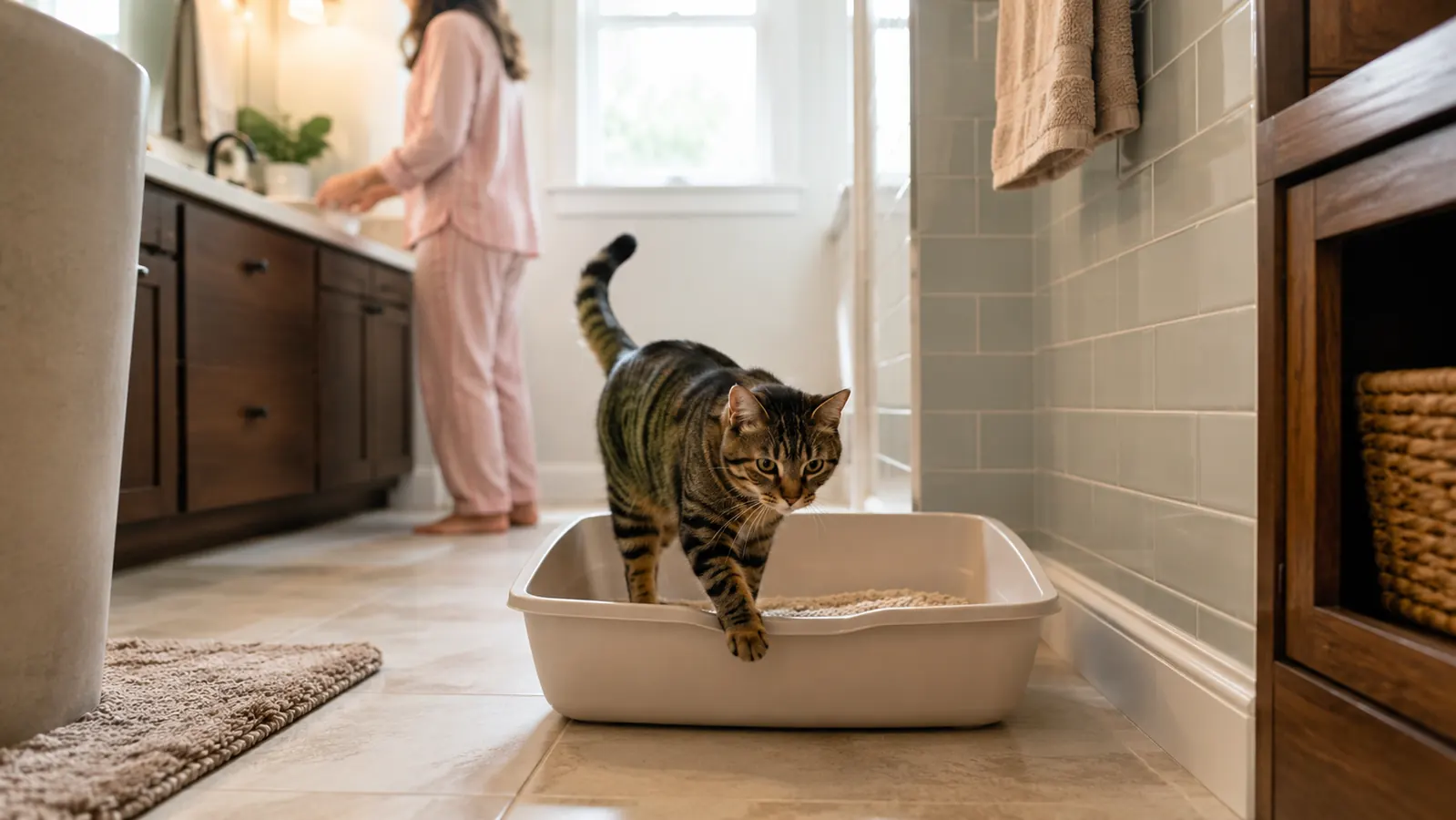
My 5-year-old tortoiseshell Biscuit and my 2-year-old orange tabby Clementine went through three different litter boxes in the span of eighteen months. First was a covered box that trapped smell so badly I could detect it from the hallway. Then a basic open pan that turned cleaning into a twice-daily scoop-and-pray situation. Six months ago I switched both cats to the Arm & Hammer Large Sifting Litter Box with Microban and stopped thinking about litter boxes as a problem I needed to solve. This review is what I learned in those six months of daily use.
The first thing worth saying clearly: this is a manual sifting tray, not a self-cleaning box. There is no motor, no sensor, no app, and no subscription. You do the sifting. The design makes that task fast and relatively clean, but the work is still yours. If you are hoping for something that cleans itself while you sleep, this is not it. If you are willing to spend about thirty seconds every day or two in exchange for a genuinely well-designed system that costs a fraction of the electric alternatives, keep reading.
The Quick Verdict
A smart, low-tech manual sifting system that beats a basic pan in every daily-cleaning metric, though lighter cats and aggressive diggers will test its limits.
Amazon Check Today's Price →If you are still scooping a plain open pan twice a day, this is the upgrade that costs less than a bag of litter.
The Arm & Hammer Sifting Litter Box with Microban is available on Amazon with over 54,000 ratings and a 4.4-star average. Click below to check today's price.
Amazon Check Today's Price on Amazon →How the Three-Tray Sifting System Works
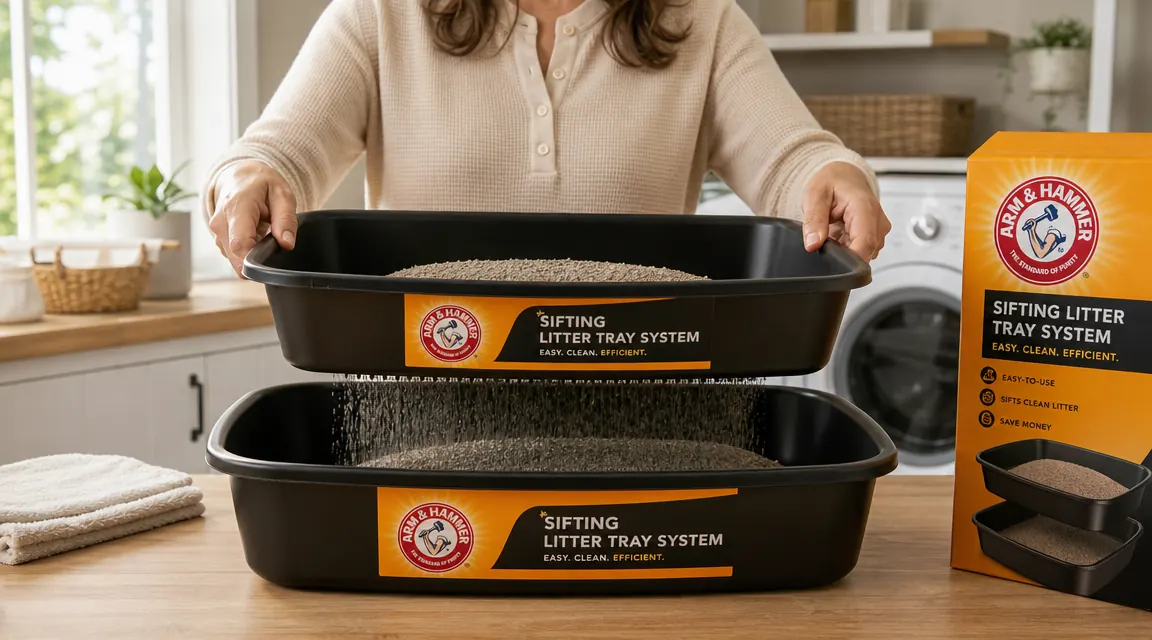
The setup ships as three identical-looking rectangular trays. Two of them have a grid of small holes punched across the bottom, like a colander. The third is solid, with no holes. That solid tray is the base. You stack one perforated tray inside it, fill with about three inches of clumping litter, and set the second perforated tray on top empty. When a cat uses the box, they use the top perforated tray. Litter sifts down through the holes into the solid base tray over time, but clumps are too large to fall through.
Cleaning is one motion. You lift the top perforated tray straight up. Loose litter falls through the holes back into the tray below. Clumps stay on top and you dispose of them. Then you set that now-clean perforated tray at the bottom of the stack, under the solid tray, rotating the system. The solid tray becomes your new middle layer, and the remaining perforated tray is now on top with fresh litter ready for the cats. You add a small amount of litter to top it off and you are done. No scooping. No hunting through litter for buried clumps.
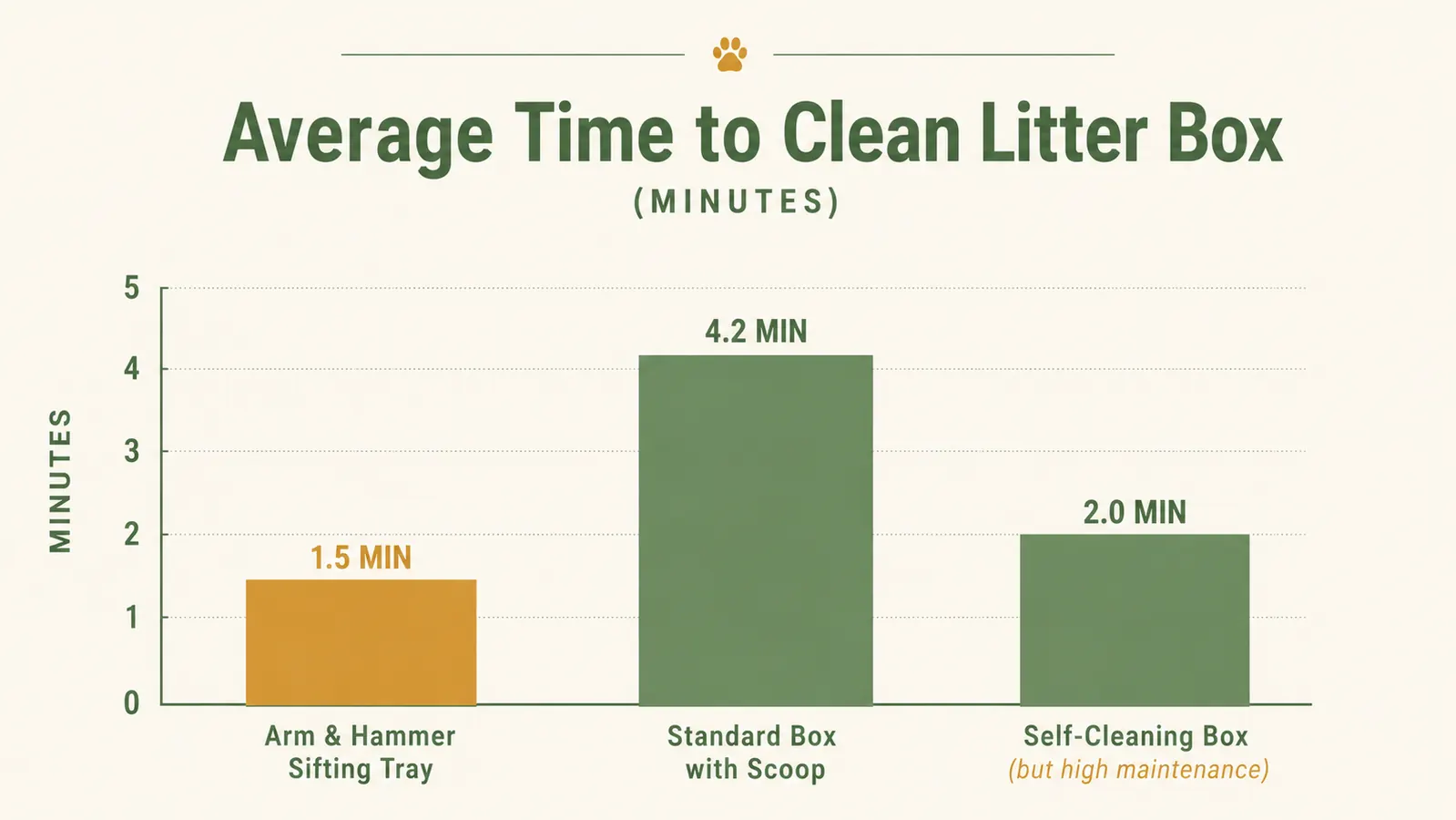
The whole cycle takes me about 45 seconds once I had the pattern down. The first week I got confused about which tray went where and made it harder than it needed to be. After that it became automatic. I do it every morning before my coffee is finished.
Microban: What It Actually Does and What It Does Not
Microban is an antimicrobial additive built into the plastic during manufacturing. The antimicrobial protection is integrated into the material itself, not a coating sprayed on afterward. It inhibits the growth of bacteria, mold, and mildew on the tray surface. That matters because bacteria growth is what causes the stale, persistent ammonia smell you get from a box that has not been scrubbed in a while.
What Microban does not do is neutralize odor from fresh waste. It does not replace litter, does not stop the smell of a cat doing their business right now, and does not eliminate the need to clean regularly. I want to be direct about this because the marketing language sometimes implies more than the science delivers. What you actually get is a tray surface that stays cleaner between deep washes and that does not develop that persistent musty plastic smell that unprotected trays develop over time. After six months my trays still smell like nothing when they are clean, which is not something I could say about my previous basic pan at the six-month mark.
I wash the trays with dish soap and warm water every two to three weeks. With a standard pan I was scrubbing off buildup every week. The Microban trays have noticeably less residue sticking to the plastic between washes, which makes deep cleaning faster and means less bacterial film is sitting in the box between cleans.
Size, Dimensions, and Real-Cat Testing
The listing says large, and in this case the label is honest. The interior usable space is roughly 18 inches by 15 inches, which is enough for a standard-sized adult cat to turn around, squat, and exit without contorting. Biscuit weighs about 9 pounds and uses it without complaint. Clementine is 11 pounds and occasionally steps on the rim when climbing in, but he has done that with every box we have owned, so I do not hold it against this one.
The sides are about 5 inches tall, which is on the lower end for cats who squat high or who dig with real enthusiasm. Clementine is a vigorous digger and he kicks litter over the front edge regularly. I added a litter mat in front of the box and that catches most of what escapes. If your cat is a serious digger and you have a hard floor, budget for a good mat alongside this purchase. The low sides are the single biggest functional limitation of this design.
After six months these trays still smell like nothing when they are clean. My previous basic pan had permanent odor baked into the plastic by month four. That is the Microban difference in practice.
Durability of the Plastic After Six Months
The plastic is lightweight polypropylene, which is standard for litter trays at this price. Lightweight is a mixed bag here. On the upside, the trays are easy to lift and rotate, and easy to carry to the sink for washing. On the downside, the plastic flexes more than I expected when I lift a full tray. In the first two weeks I dropped a loaded tray once because the flex surprised me and I lost my grip. I learned to hold it with two hands close to the base.
After six months of daily handling and biweekly washing, I have no cracks, no warping, and no discoloration. The holes in the perforated trays have stayed clean and clear without any clogging. The solid tray base has one small scuff where Clementine's back claw caught the rim, but structurally everything is sound. I would not describe this plastic as premium but I would call it adequate for the job. I do not expect it to last a decade but I think two to three years of regular use is realistic.
Litter Type Compatibility
This system only works properly with clumping litter. Non-clumping litters, crystal litters, and pellet litters do not sift correctly because the waste does not form clumps large enough to be caught by the tray holes. With a good clumping clay litter, the system works as advertised. I use a standard unscented clumping clay and have had no issues. The holes in the perforated trays are sized for typical clumping clay litter granules to pass through while holding formed clumps. I tried a slightly finer clumping litter once and found some wet litter was passing through the holes before it had fully clumped, leaving a mess in the middle tray. Stick with a medium-grain clumping clay for best results.
I also run two cats on this single box setup, which is on the edge of the recommended rule of one box per cat plus one. With two well-mannered cats who do not compete over territory, one box has been fine. If your cats have any litter box territorial stress, you would need two setups. The system is inexpensive enough that buying two and stacking them in different rooms is a reasonable option.
Litter Tracking
I want to address tracking separately because it comes up in a lot of litter box complaints and this design does not solve it. The open-top design means cats carry litter on their paws when they exit. The low sides mean litter gets kicked out during digging. I track litter about three feet from the box on a hardwood floor. A litter mat reduces this significantly. I have tried two different mats and settled on a double-layer waffle-pattern mat that catches about 80 percent of what Clementine kicks out. Without a mat, the tracking was genuinely annoying. With one, it is manageable. Consider the mat a required accessory if you have hard floors.
What I Liked
- Manual sifting cycle takes under a minute once you have the rotation down
- Microban plastic stays odor-free between washes noticeably longer than unprotected trays
- No electricity, no subscription, no parts to replace
- Large enough for most adult cats including an 11-pound tabby
- Easy to disassemble and wash in a sink or bathtub
- Made in the USA
Where It Falls Short
- Low 5-inch sides mean heavy diggers kick litter over the edge
- Only works with medium-grain clumping clay litter, not crystals or pellets
- Lightweight plastic flexes when lifting a full tray, requires two-hand grip
- Open top does nothing for spray-prone male cats who aim sideways
- Microban suppresses bacterial growth but does not neutralize fresh waste odor
How It Compares to a Basic Open Pan
Before this box I used a basic rectangular open litter pan that cost about eight dollars. The pan did nothing wrong, it just asked me to do everything: scoop twice a day to stay ahead of smell, dig through litter hunting for buried clumps, and scrub the whole thing weekly to prevent the plastic from absorbing odor. The Arm & Hammer sifting system does not eliminate all of that work but it reorganizes it into a faster, cleaner process. The rotation system means I am not hunting for clumps, I am just lifting and sifting. The Microban means I am scrubbing less often. The net result is fewer daily decisions about litter box maintenance, which sounds trivial until you have done it 365 days in a row.
For more on how this box stacks up against a high-sided alternative, I compared it directly in the Arm & Hammer vs IRIS USA head-to-head if you want a side-by-side breakdown of odor control and scatter differences between the two designs.
Who This Is For
This box is a strong fit if you have one or two adult cats of average size, you use clumping clay litter already, you are tired of the daily scoop routine and want a faster system, and you prefer not to spend on an electric self-cleaning box. It is also a good choice if you have had plastic trays develop that permanent musty smell after a few months, because the Microban difference on that specific issue is real and measurable. If your cat is a senior or has mobility issues, the relatively low entry point makes it easy to step in and out.
Who Should Skip It
Skip this box if your cat is a spray-prone unneutered male, digs like they are trying to reach the floor below, or weighs more than 14 to 15 pounds and needs a larger footprint. The low sides will not contain sideways spray or enthusiastic digging. If you use crystal or pellet litter, the holes in the sifting trays will not work for your litter type and the whole system breaks down. Also skip it if you want complete hands-off convenience. This is a manual system and it rewards people who will actually do the daily rotation. If the box sits untouched for five days, you lose most of the benefit over a basic pan. Read through the 10 most common litter box mistakes I see cat owners make, especially if you have been battling persistent smell regardless of which box you use.
Six months of daily use and I still have not gone looking for a replacement. That says more than any star rating.
The Arm & Hammer Large Sifting Litter Box with Microban is sold on Amazon. With over 54,000 reviews and a 4.4-star average, it is one of the most-tested manual litter systems on the market. Check the current price below.
Amazon Check Today's Price on Amazon →