

I bought my first KONG Classic about four years ago when Bear, my 65-pound Rottweiler mix, started using the corner of my drywall as a teething toy. He was two years old, newly adopted, anxious, and had jaw muscles that could crack a soup bone in under a minute. My neighbor told me the red KONG was basically indestructible. My neighbor was wrong about that specific part, but she was right that the KONG is a great toy. Those two things can both be true, and understanding the gap between them is the whole point of this review.
The KONG Classic has over 92,000 reviews on Amazon at a 4.6-star average. That number tells you it is a genuinely useful product. It does not tell you which rubber grade to buy, what size to order, why your dog may lose interest after two weeks, or what happens to the inside of the toy if you let it sit for three hours after a stuffing session. That is what I am going to cover here, because those are the things that determine whether you get three years of use out of a KONG or find it shoved under the couch after a month.
The Quick Verdict
The KONG Classic is an excellent enrichment toy for moderate chewers and boredom cases, but power chewers need the black Extreme, most buyers order one size too small, and the cleaning step is more involved than the listing suggests.
Amazon Check Today's Price →Your dog is destroying furniture because the toy drawer has nothing that costs him mental energy.
The KONG Classic is available in every size from Small to XXL. Check today's price and verify which size fits your dog before you order. The size chart is on the listing, and I strongly recommend going one size up from whatever it says.
Amazon Check Today's Price on Amazon →How I Have Actually Used It
With Bear specifically, I started with a Large KONG on the recommendation of the KONG size chart, which suggests Large for dogs up to 65 pounds. Bear is exactly 65 pounds on a lean day. The Large KONG was technically the right size according to the chart. In practice, he could pick it up and carry it like a tennis ball, which meant no real engagement. He batted it across the kitchen twice and then sat down and looked at me. I ordered an XL the same evening.
The XL KONG with a frozen peanut butter and kibble fill kept him occupied for about 25 to 35 minutes per session, which is the longest anything had held his attention without me being directly involved. I now use three KONGs in a rotation: two XL and one XXL I bought to test. I prep them Sunday evenings, freeze them overnight, and pull one out each morning. Over four years and across Bear plus two other dogs I have helped care for, I have used the Classic, the Extreme, and the Senior (pink) version. Each is genuinely different and they are not interchangeable.
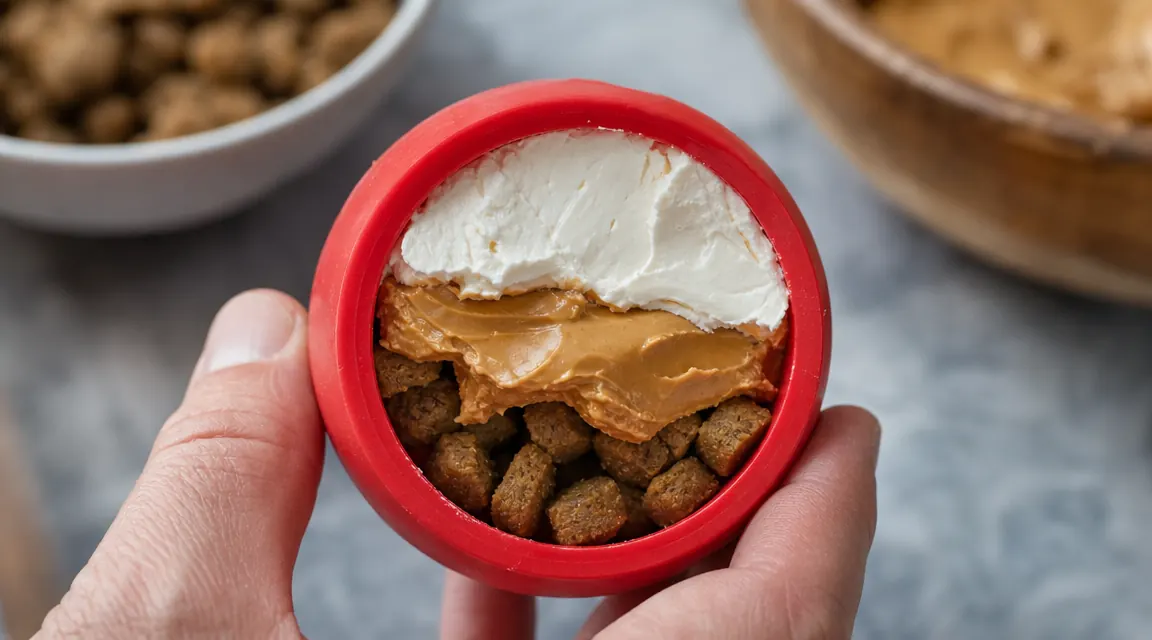
The image below shows what cleaning actually looks like after a session. This is the part nobody photographs in the product listing.
The Red Classic Is Not for Power Chewers. Here Is Why That Matters.
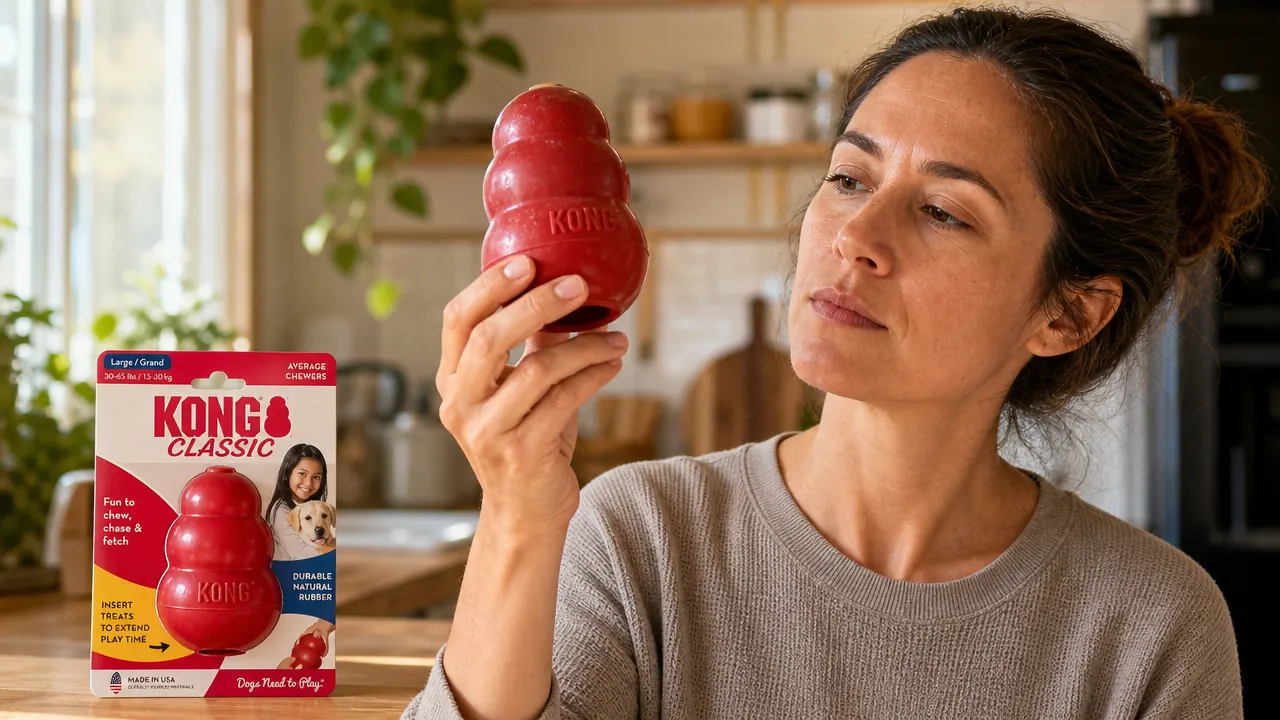
KONG sells three main rubber compounds in their standard line. The pink Senior is the softest and is designed for puppies, senior dogs with tender gums, and gentle chewers. The red Classic is natural rubber rated for moderate to heavy chewers. The black Extreme is a harder, denser compound rated specifically for power chewers. The wall thickness on the Extreme is noticeably greater than on the Classic. If you hold them side by side, the difference is obvious.
Bear lasted about three months on a red Classic XL before I started noticing small surface gouges along the outer ridges. He was not splitting the toy, but he was making real progress on the rubber in a way that concerned me. I switched him to the black Extreme and the surface damage stopped. Four months on the Extreme and the outer wall looks almost new. For dogs with jaw strength in the Rottweiler, Cane Corso, or American Bully category, the Classic red will degrade faster than it should and the Extreme is the correct purchase.
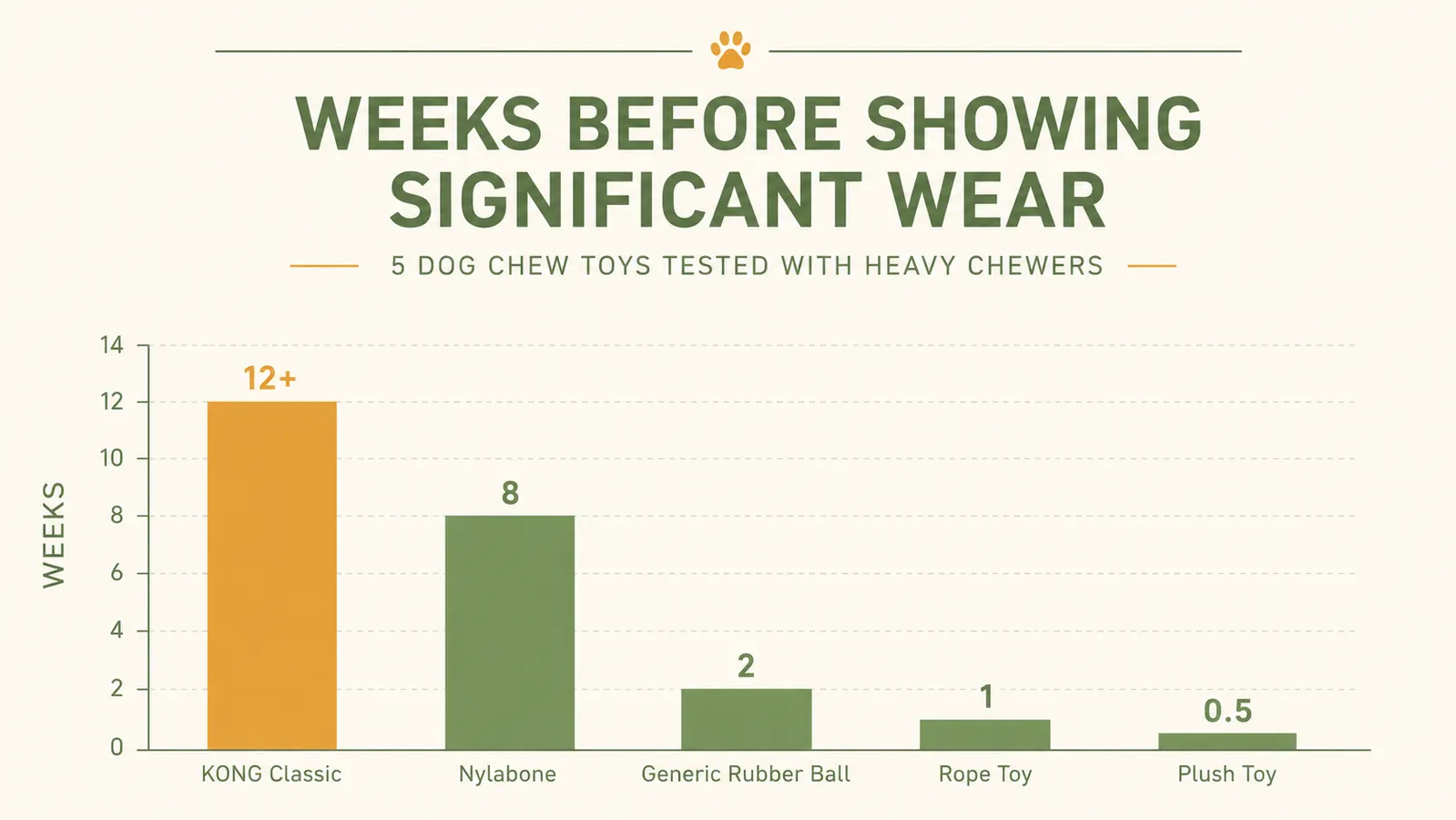
The Amazon listing for the Classic does say it is for moderate to heavy chewers, but the word 'heavy' creates ambiguity. In KONG's own language, 'heavy' means a strong chewer who still respects the toy, not a dog who treats every object in its path like a destruction target. If your dog has destroyed a Nylabone, flipped a rubber chew toy inside out, or cracked a tennis ball in two, buy the Extreme and skip the Classic entirely.
KONG sells three rubber compounds. Most people buy the red Classic for a black-Extreme dog. The listing will not stop you. I am trying to.
Sizing: The Number One Reason KONGs End Up Ignored
The KONG size chart runs Small for dogs under 20 pounds, Medium under 35, Large under 65, XL under 90, and XXL for giant breeds. These are the ranges printed on the packaging. The problem is that 'under 65 pounds' for Large is calibrated on average dog proportions, and a lot of dogs do not have average proportions. Bear at 65 pounds has a Rottweiler jaw and a head the size of a cantaloupe. A large KONG that fits in his mouth like a tennis ball is useless as an enrichment toy. He needs the XL or XXL.
My rule is to go one size up from whatever the chart recommends. If the chart says Large, buy XL. If it says XL, buy XXL. The reasoning is simple: a KONG that is slightly too large still works fine as an enrichment toy. A KONG that fits in the dog's mouth too easily becomes a ball rather than a puzzle, and a KONG that can fit into the back of the throat is a choking hazard. The size chart errs toward smaller for cost reasons, I think, but the safety margin runs the other way. Bigger is safer and more engaging.
There is also a breed-specific angle here. Short-snouted breeds like English Bulldogs and French Bulldogs have trouble licking food out of a standard KONG opening because the toy is designed around a longer snout. KONG makes breed-specific versions for brachycephalic dogs. If your dog has a flat face, the standard Classic is the wrong shape even if the size is right.
The Cleaning Problem Nobody Talks About
KONG markets the Classic as dishwasher safe, top rack. That is technically accurate. But there is a gap between 'dishwasher safe' and 'dishwasher will actually clean it.' Peanut butter, Greek yogurt, and canned pumpkin all congeal inside the hollow cavity of the toy if you leave the KONG sitting out for more than a couple of hours after the dog finishes. The fat in peanut butter specifically sets into a thick coating on the inner rubber ridges. A standard dishwasher cycle with dish detergent will not cut through baked-on peanut butter grease that has had four or five hours to harden.
What actually works: soak the KONG in warm water for 15 to 20 minutes immediately after the session ends, then run a bottle brush through the cavity before putting it on the top rack. If you skip the soak and go straight to the dishwasher on a used KONG, you will get a toy that smells clean but has visible residue on the inside if you hold it up to the light. That residue builds up over sessions and eventually starts to smell even after washing. I have had to retire two KONGs for this reason, both of which were treated as dishwasher-only rather than pre-soaked.
If you use raw proteins as stuffing, meat-based baby food, or anything with a strong oil content, the cleaning time goes up. The simpler the stuffing, the easier the cleanup. For people who want low-maintenance, kibble mixed with water and frozen is the easiest fill to clean after.
When Dogs Lose Interest: What Is Actually Happening
I have seen this pattern more times than I can count on dog owner forums and in conversations at the dog park: someone buys a KONG, their dog goes crazy for it the first two sessions, and then by week three it sits ignored in the corner. They assume the product stopped working. Usually that is not what happened.
There are three common reasons a dog stops engaging with a KONG. First, the stuffing got boring. Dogs are novelty seekers. The same peanut butter plug every single day eventually stops being a puzzle and becomes a boring routine. Rotating the stuffing matters. Second, the dog figured out the most efficient extraction method for the current stuffing and the mental challenge evaporated. When Bear learned to press the XL KONG against the baseboard for leverage while he licked, his session time dropped from 30 minutes to about 10. Switching to a tighter, more frozen fill brought it back up. Third, the KONG is the wrong size and the dog never truly engaged in the first place, they just checked it out and walked away.
The fix for all three is the same: harder stuffing, better frozen, and a size that forces real effort. A KONG that the dog has to work at for 20 minutes is doing its job. One that gets cleaned out in five minutes is not challenging enough for that dog.
Choke and Size Safety: What the Reviews Get Wrong
I want to address this directly because I have seen panicked posts about dogs choking on KONGs. The KONG Classic is not a zero-risk toy. No toy is. The risk with a too-small KONG is that a determined dog can work the toy far enough into the back of the mouth that the suction created when they try to pull it off can be intense. This is an emergency that has required vet visits. It is not common with properly sized KONGs, but it is the specific reason I keep pushing the size-up rule.
The test I use: if you can get more than two-thirds of the KONG into your dog's mouth when their jaw is open, it is too small. You should be able to see the bottom portion of the toy clearly past the dog's front teeth even when they are working the opening. If the toy disappears almost entirely into the mouth, go up a size immediately. This is more important than the weight chart, more important than matching the label recommendation.
I also check KONGs monthly for structural changes, any cracking around the small opening at the tip, deep gouges that expose thinner inner walls, or any rubber chunks that have begun to detach. KONG suggests replacing any toy that shows structural damage, and they are right. Retire it, do not take a chance.
What I Liked
- Enrichment value is real and measurable: a properly sized, properly frozen KONG occupies a dog for 20 to 35 minutes consistently
- Rubber durability is genuinely good for moderate to strong chewers when the correct grade is selected
- Dishwasher safe on the top rack with proper pre-soaking
- Widely available in all sizes, easy to build a rotation at a low per-unit cost
- No squeakers, no stuffing, no rope fibers, no parts that shed into a choking hazard as the toy ages
- The Extreme black grade is a legitimately tougher option for power chewers, and KONG makes upgrading easy
Where It Falls Short
- The red Classic is not for true power chewers despite 'heavy chewer' language on the label
- The KONG size chart consistently undersizes for dogs with broad skulls or short faces
- Peanut butter and oil-based fills congeal inside the toy and require pre-soaking plus a bottle brush to clean properly
- Dogs lose interest if the stuffing stays the same every session, requiring ongoing variety
- Brachycephalic breeds (Bulldogs, Frenchies, Pugs) need the breed-specific KONG, not the standard Classic
- No indication on the Classic listing that the Extreme exists or that your dog may need it instead
Who Should Buy the KONG Classic
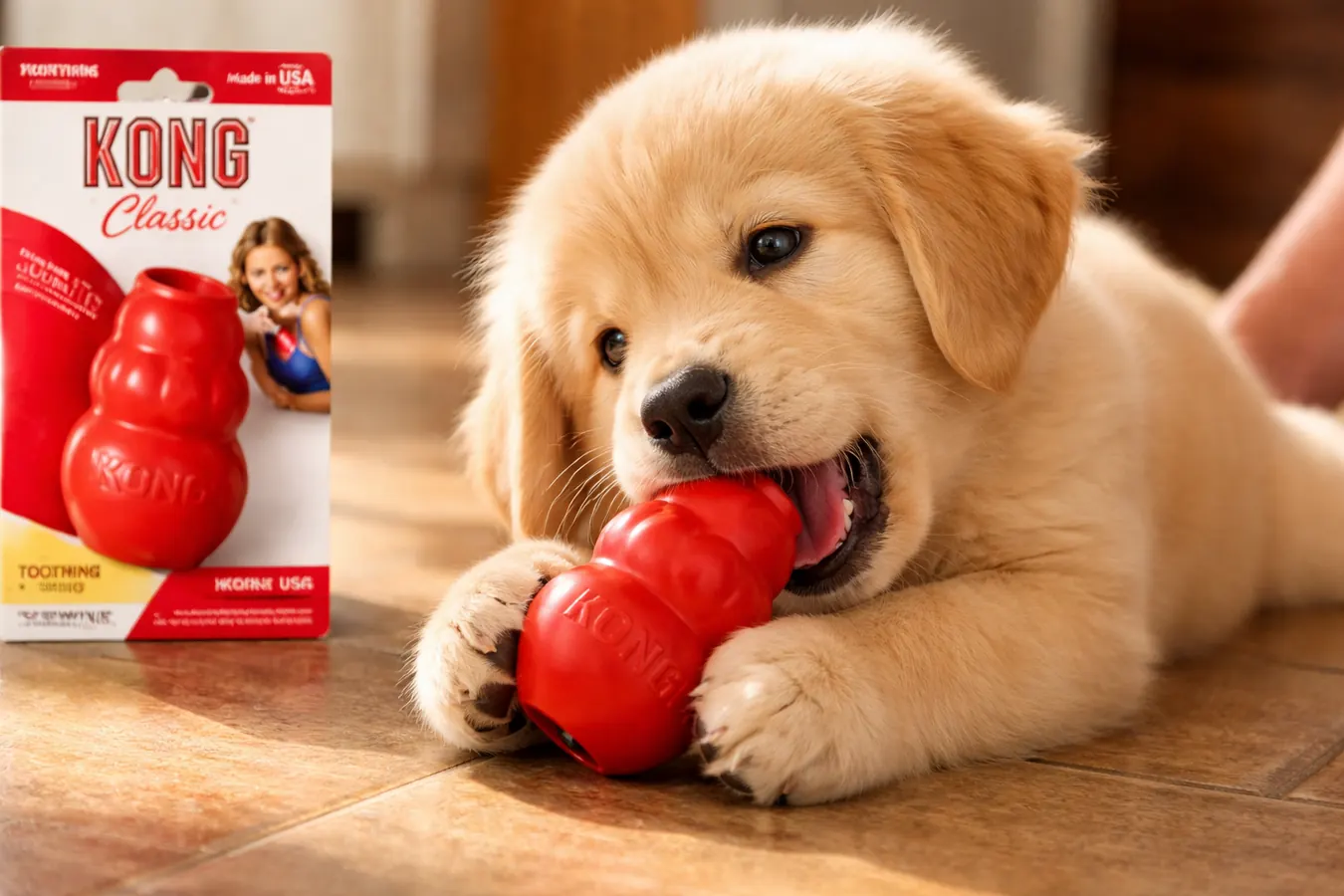
The KONG Classic is the right choice for dogs who are destructive from boredom rather than from compulsive power chewing, puppies going through the teething phase who need an acceptable chewing outlet, dogs who are home alone during the day and need enrichment that does not require supervision, and owners who want a toy they can freeze and forget about for the morning. It is also strong for anxious dogs who self-soothe through oral activity. The Classic gives them something acceptable to lick and work on without creating a hazard. I have recommended it to four separate new dog owners in the last two years and all four still use it.
Who Should Skip the Classic and Buy Something Else
If your dog is a confirmed power chewer who splits rubber, buy the KONG Extreme (black) directly. The Classic will show damage within weeks and you will end up buying the Extreme anyway. If your dog has a flat face, look for KONG's brachycephalic-specific line before purchasing. If your dog genuinely has no food motivation and treats are not interesting to them, no stuffable toy is going to hold their attention and you are better served by tug toys, snuffle mats, or other enrichment formats. And if you are not willing to spend the five minutes to stuff and freeze the toy before each session, the engagement time drops to the point where the product feels like a disappointment. The KONG Classic is a prep-it-in-advance toy. That is not a flaw, but it is a reality worth knowing before you buy.
One more specific flag: if you have a giant breed dog, a Great Dane, Saint Bernard, or similarly large animal, the XXL Classic is often not enough. These dogs need both the XXL size and the Extreme compound. Their jaw pressure is categorically different from a 90-pound standard-weight dog. Do not assume the XXL Classic will hold up on a breed with that much force behind the bite.
If you are buying the KONG for the first time, go one size up from the chart and confirm you have the right rubber grade for your dog's chew style.
The KONG Classic is available in sizes Small through XXL. Read the sizing chart on the listing against your dog's weight, then order one size larger. Check today's price before you add it to your cart.
Amazon Check Today's Price on Amazon →