

My border collie mix Pepper is three years old, 42 pounds, and treats boredom like a personal offense. Left without something productive to do, she has pulled an entire loaf of bread off the counter, excavated a corner of the living room rug, and once dismantled a cardboard Amazon box before I had finished unloading the car. She is not a bad dog. She is a bored dog, and bored dogs will always find a way to solve that problem on their own terms.
If you need to keep a bored dog busy without following them around the house all day, the answer is not more scolding or even more exercise alone. It is building a layered enrichment routine that gives the dog something constructive to focus on whether you are home or not. The centerpiece of my routine is a stuffed, frozen KONG Classic, which I will walk through in step one. But the KONG works best as part of a broader system, not as a standalone fix. Here is the full five-step approach I have used with Pepper for the past 18 months.
If your dog destroys things when bored, a stuffed frozen KONG is the single highest-impact fix you can start today.
The KONG Classic has 92,000+ reviews on Amazon for a reason. It is the foundation of this entire routine. Grab the right size for your dog before reading step one.
Amazon Check Today's Price on Amazon →Step 1: Build a Stuffed and Frozen KONG Routine
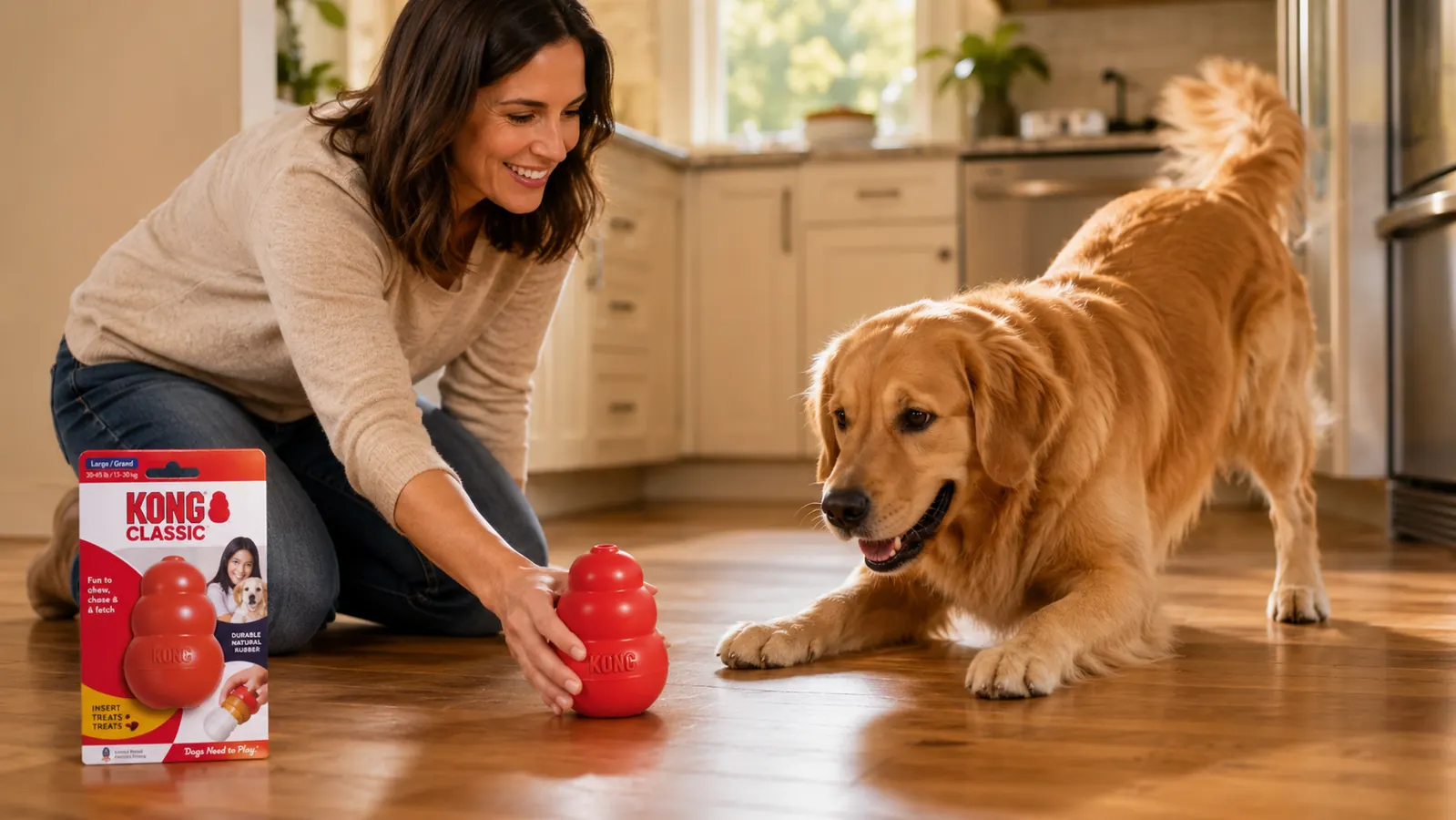
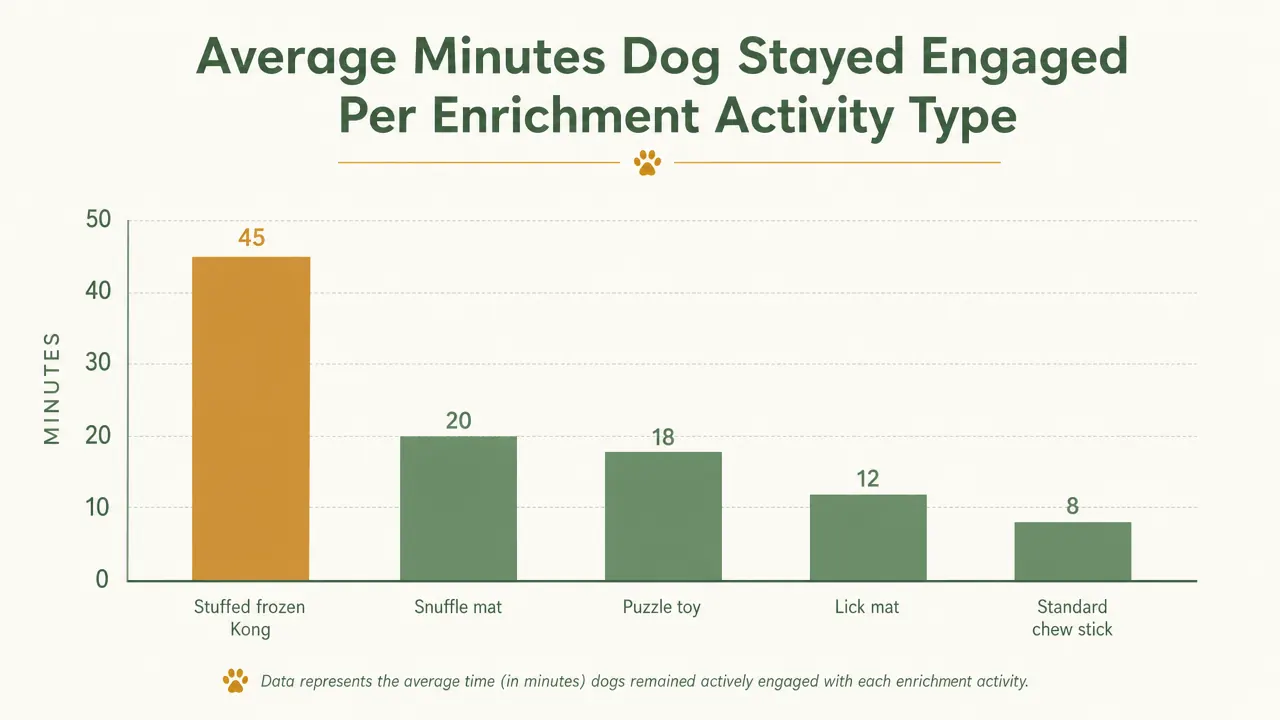
A frozen KONG is not a trick. It is genuinely the most effective solo enrichment tool I have found for a busy, high-energy dog. The rubber is durable enough to survive an aggressive chewer, and the hollow center gives you something to work with. The key word here is frozen. An unfrozen KONG stuffed with peanut butter will keep Pepper occupied for about six minutes. The same KONG frozen solid the night before keeps her busy for 45 to 55 minutes, sometimes longer.
My standard fill for a medium KONG: a thin smear of xylitol-free peanut butter at the small end to create a seal, then a layer of her regular kibble, another peanut butter layer, a spoonful of plain Greek yogurt, more kibble, and a final peanut butter plug at the large opening. Drop it in a cup in the freezer overnight. In the morning it comes out ready to go. Pepper gets it in her crate or on her mat when I leave, and she is genuinely happy to have it. The KONG Classic (ASIN B000AYN7LU, rated 4.6 stars across 92,000+ reviews) is the one I use. If you want a full breakdown of stuffing combinations, the article on 10 ways to stuff a KONG covers every fill method I have tested, ranked by how long they actually hold attention.
One practical note on sizing: most people buy too small. Pepper is 42 pounds and she uses the large (L) KONG, not medium. If your dog can fit the whole toy in their mouth, go up a size. The toy should require active effort to work, not be something they can carry around like a chew bone. KONG publishes a size guide by dog weight on their website, and it is worth checking before you order. Buying the wrong size the first time is the most common reason people say the toy did not work for their dog.
Step 2: Add a Puzzle Feeder for Mealtime
Swapping a regular bowl for a puzzle feeder is the lowest-effort enrichment upgrade you can make. Instead of inhaling her kibble in 45 seconds, Pepper spends 12 to 18 minutes working out how to access it. Puzzle feeders require the dog to slide panels, flip covers, or navigate channels to get each piece of food. The cognitive load of figuring it out is surprisingly tiring, especially for smart, high-drive breeds. Pepper is a border collie mix and she takes to puzzle feeders immediately, but I have seen even lower-energy dogs slow down and focus once food is involved.
Start with a level-one or level-two puzzle, not the hardest one. Dogs who get frustrated by a puzzle that is too difficult will flip it over and eat off the floor, which defeats the whole point. A beginner-level slide puzzle that takes her about 15 minutes is more valuable than an advanced one she gives up on in three. I use puzzle feeders for her morning meal, which she eats while I get ready, and it genuinely settles her before her walk. A mentally tired dog walks better on leash than a physically tired one. If you notice your dog finishing the puzzle in under five minutes, step up to the next difficulty level rather than giving a larger portion of food.
Step 3: Use Sniff and Scatter Games Indoors and Out
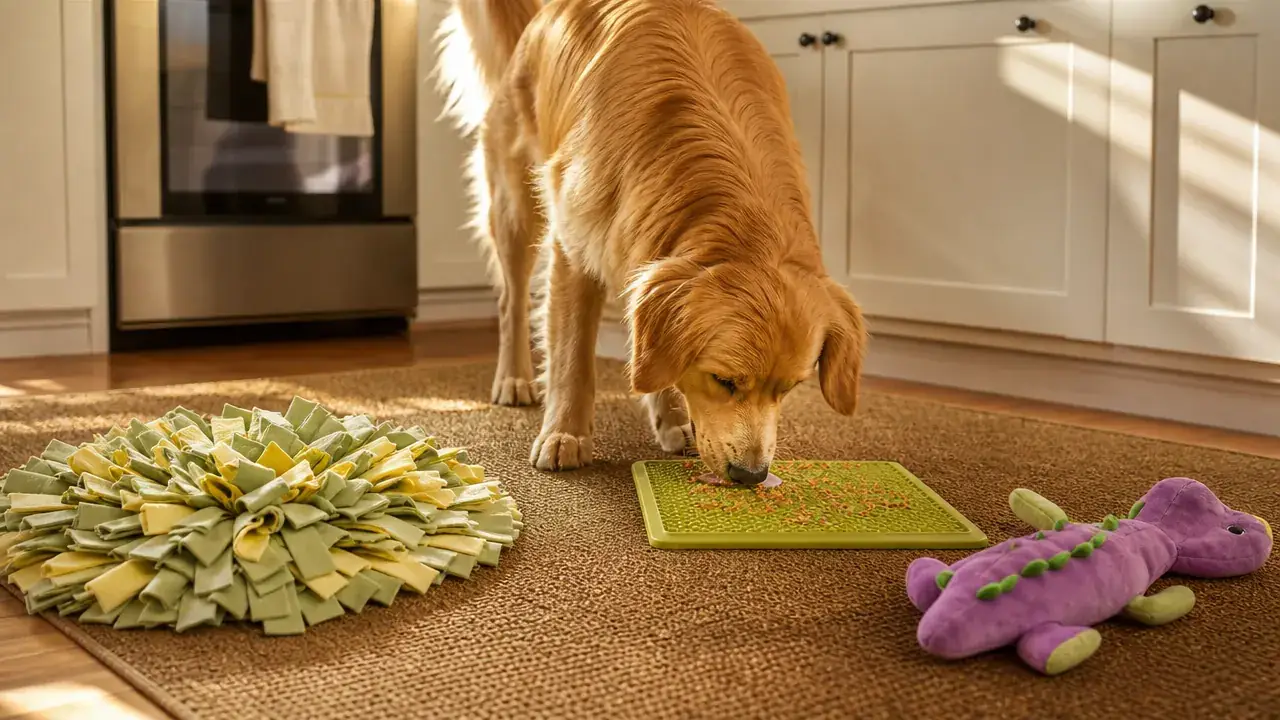
Sniffing is the most underrated form of enrichment for dogs. A 20-minute sniff walk tires Pepper out more than a 40-minute on-leash jog, because it is cognitively demanding in a way that steady-pace exercise is not. You can apply that same principle indoors or in the yard with scatter feeding. Take a small portion of her kibble and scatter it across the lawn, in a patch of longer grass, or on a snuffle mat. She has to use her nose to locate every piece.
For indoor scatter, a snuffle mat works well. You pull the rubber strands apart slightly and push kibble down into the fabric so she has to root for it. On days when Pepper is wound up and I cannot take her outside, 15 minutes on the snuffle mat genuinely takes the edge off. It is not a substitute for exercise, but it is a fast, free way to give a bored dog a productive task that uses her brain. Pair scatter feeding with the frozen KONG on busy mornings and you can send a dog into her crate with enough going on to settle in under two minutes.
You can also run a basic hide-and-seek variation: ask the dog to sit and stay, hide a treat somewhere in the room, then release with 'find it.' Most dogs pick up the concept within two or three sessions. Pepper learned it in about 20 minutes, and now she will search a room methodically for three to four minutes before giving up, which is a solid chunk of focused mental work that requires exactly zero equipment.
Step 4: Build a Structured Daily Exercise Block
Mental enrichment works best when it runs alongside physical exercise, not as a substitute for it. A dog who has not had enough physical output will struggle to settle even with a KONG or a puzzle feeder. The key word in this step is structured. Free time in the backyard does not count the way most owners assume it does. Most dogs just patrol the perimeter, bark at things, and come inside still buzzing. Structured exercise means the dog is focused on a task the entire time: fetch, tug, a brisk on-leash walk with intermittent sits and direction changes, or working through a training sequence.
For Pepper, 25 to 30 minutes of fetch or structured leash work in the morning sets a completely different tone for the rest of the day. She is calmer, more willing to rest, and less likely to patrol the house looking for trouble. The enrichment tools in the other steps are dramatically more effective when the physical baseline is covered. If you are relying entirely on puzzle toys and frozen KONGs without a daily exercise block, you will see partial results at best. Think of the stuffable toy and the puzzle feeder as the second half of a two-part routine, not the whole solution on their own.
Step 5: Run Short Training Games Throughout the Day
Two-minute training sessions scattered through the day are more mentally exhausting for a dog than one long session. I run Pepper through a quick 10-rep sit-stay sequence, a few rounds of hand-target practice, or a short shaping game before I sit down to eat lunch or before I leave the house. The sessions are short enough that she stays engaged and is never pushed into frustration, but they add up to real cognitive work over the course of the day.
Training games also strengthen your relationship with the dog and give her a clear framework for what earns rewards. A bored dog who has no idea how to earn your attention will create her own audition, usually involving something expensive. A dog who knows that sitting politely, targeting your hand, or waiting at a doorway earns a treat has a better channel for that same energy. Keep the training sessions upbeat and end on a success. Always.
You do not need formal obedience training to run these games. Basic impulse control, hand targeting, and name recognition are enough to build a five to ten-minute session that genuinely tires a smart dog out. Add in a new trick every few weeks and the novelty effect alone keeps the engagement high. Pepper learned to spin, bow, and back up on cue in about two weeks of casual two-minute sessions, and those tricks still reliably focus her when she is having a busy brain day.
What Else Helps
Chew rotation matters more than most people realize. A new chew holds a dog's attention much longer than the same chew they have seen every day for three weeks. I keep three or four different chew types cycling through, pulling one out every few days so each one feels novel. Bully sticks, antlers, rubber chew toys, and stuffable toys like the KONG Classic all serve different purposes and different chewing styles. If your dog is a power chewer, the detailed KONG Classic review on this site goes deep on size selection, rubber grade options, and whether the toy actually holds up to a dog who destroys everything. Rotating the toys your dog has access to works the same way: keep two or three in a bin, put out only one or two at a time, and swap them after a few days. The returned toys feel new again and engagement spikes back up with almost no effort on your part.
A bored dog is not a bad dog. A bored dog is a dog whose brain has not been given enough to do. Fix the input, and the output takes care of itself.
Start with a frozen KONG tonight and see the difference in your dog tomorrow morning.
The KONG Classic is the anchor of a real enrichment routine. Stuff it tonight, freeze it overnight, hand it over in the morning. Over 92,000 Amazon reviewers have tried this exact approach. Check current sizing and pricing before you order.
Amazon Check Today's Price on Amazon →